What Is a Startup? A Complete Beginner’s Guide (2026)
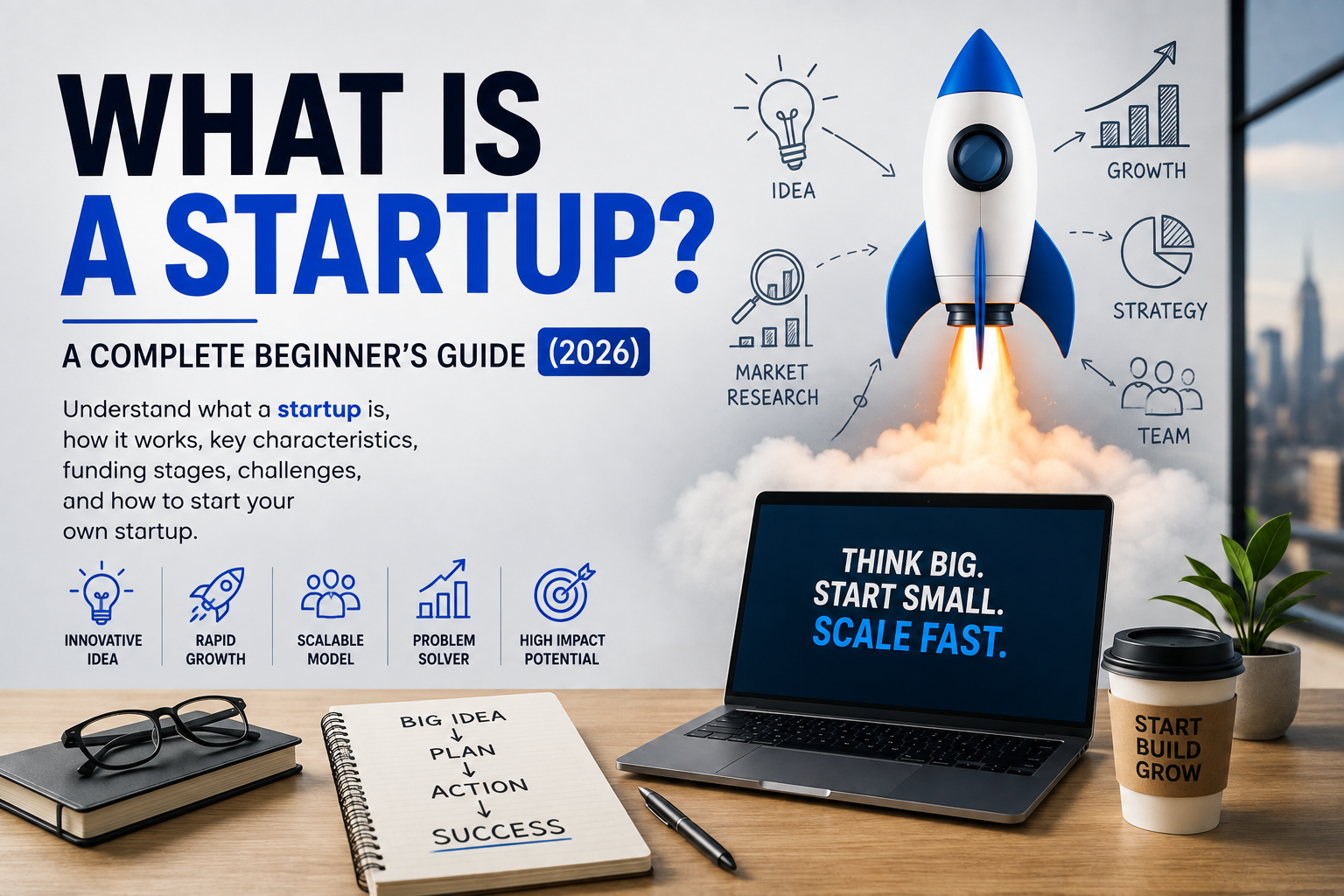
What Is a Startup? A Complete Beginner’s Guide (2026)
Introduction
Many of today’s biggest companies—including Airbnb, Uber, Spotify, and Stripe—began as startups. These businesses started with innovative ideas, small teams, and a vision to solve real-world problems in new ways.
The word startup has become increasingly popular, but many people confuse it with a regular small business. While every startup is a business, not every business is a startup. Startups are typically designed to grow quickly, use innovation to solve problems, and scale beyond local markets.
Whether you’re considering launching your own company or simply want to understand the startup world, this guide explains what a startup is, how it works, its funding stages, advantages, challenges, and practical steps to build one.
What Is a Startup?
A startup is a newly established business created to solve a problem with an innovative product or service while aiming for rapid growth.
Unlike traditional businesses that often focus on serving a local market, startups are usually built with the goal of expanding nationally or globally.
Many startups use technology to reach large numbers of customers efficiently.
Startup vs Small Business
Although both involve entrepreneurship, they have different goals.
| Startup | Small Business |
|---|---|
| Focuses on rapid growth | Focuses on steady growth |
| Often built around innovation | Often serves local customers |
| Frequently seeks investors | Usually self-funded or financed through loans |
| Designed to scale | Designed for stable operations |
| Higher risk, higher potential reward | Lower risk, steady income |
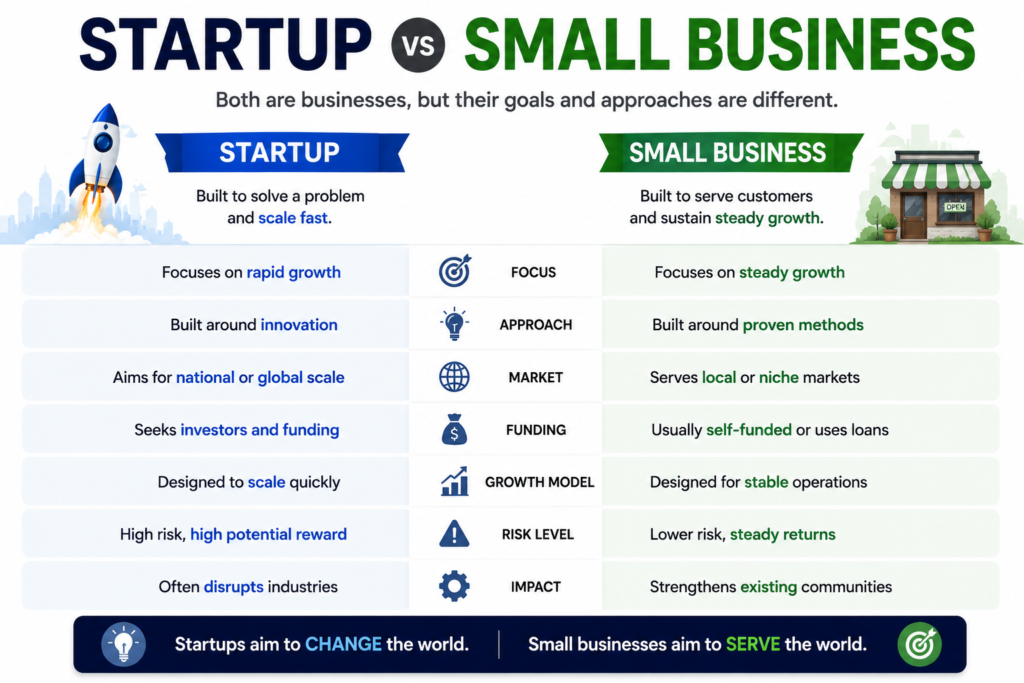
Both models can be successful depending on the founder’s goals.
Key Characteristics of a Startup
Successful startups often share several important characteristics.
Innovation
Startups introduce new ideas or improve existing solutions.
Scalability
A startup is designed to grow without increasing costs at the same rate.
Problem Solving
Successful startups solve meaningful customer problems.
Adaptability
Startups constantly improve their products based on customer feedback.
High Growth Potential
Unlike many traditional businesses, startups aim to grow quickly.
Startup Funding Stages
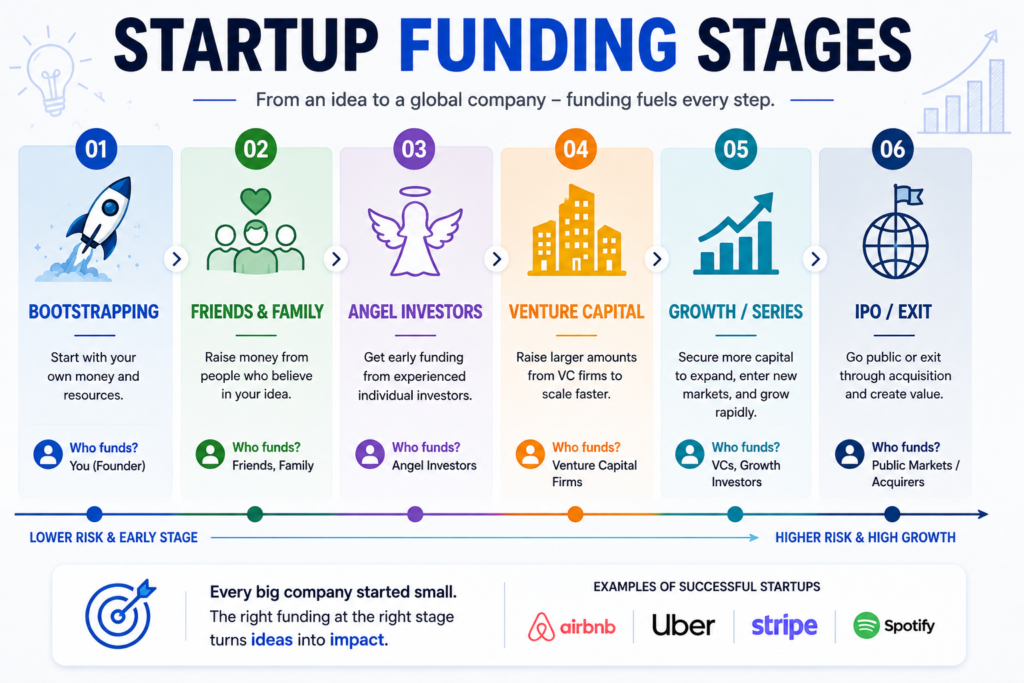
Most startups raise money through different stages.
Bootstrapping
The founder uses personal savings to build the business.
Friends and Family
Early funding often comes from people who believe in the founder.
Angel Investors
Experienced investors provide funding in exchange for ownership shares.
Venture Capital
Investment firms provide larger amounts of funding to startups with strong growth potential.
Initial Public Offering (IPO)
Some successful startups eventually become publicly traded companies.
Advantages of Starting a Startup
Launching a startup offers several benefits.
- Opportunity to solve meaningful problems
- Unlimited growth potential
- Flexibility and independence
- Ability to attract investment
- Potential for significant financial success
- Opportunity to build innovative products
Challenges of Running a Startup
Building a startup is rewarding but demanding.
Financial Uncertainty
Many startups require significant investment before becoming profitable.
Intense Competition
Startups compete with both new businesses and established companies.
Long Working Hours
Founders often work extended hours while building the company.
Risk of Failure
Many startups fail because of poor planning, lack of funding, or limited market demand.
Hiring the Right Team
Finding talented employees is critical during the early stages.
Real-World Startup Examples
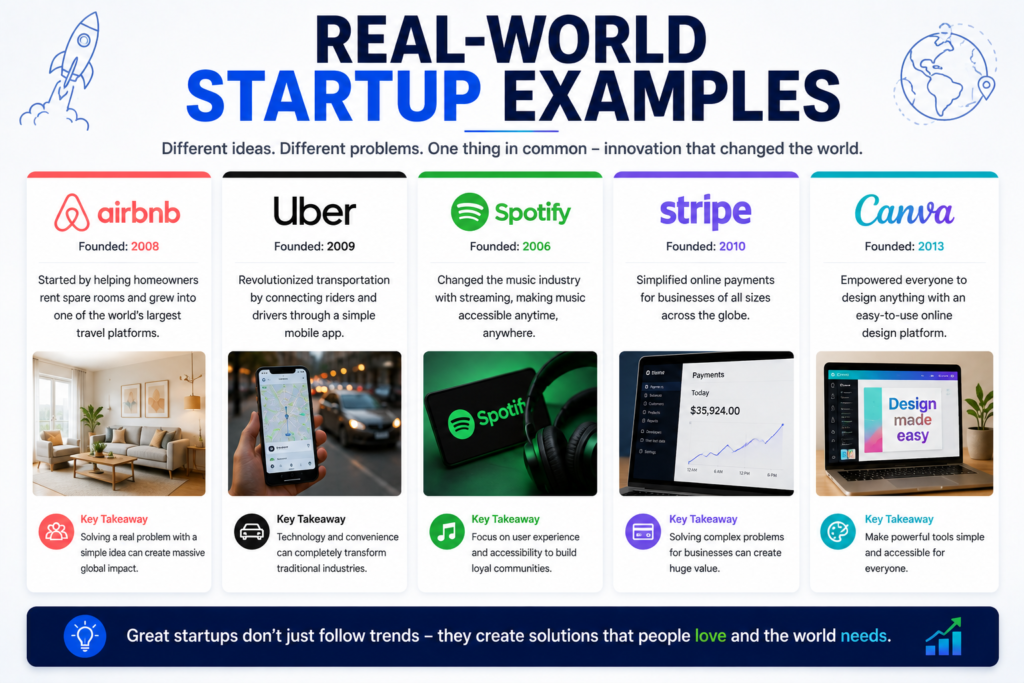
Airbnb
Started by helping homeowners rent spare rooms and grew into one of the world’s largest travel platforms.
Uber
Revolutionized transportation through mobile ride-sharing technology.
Spotify
Changed the music industry through subscription-based streaming.
Stripe
Simplified online payment processing for businesses worldwide.
Canva
Made professional graphic design accessible to millions of users through an easy-to-use online platform.
How to Start a Startup
Step 1: Find a Problem
Identify a real challenge people experience.
Step 2: Validate Your Idea
Research whether customers are willing to pay for your solution.
Step 3: Build a Minimum Viable Product (MVP)
Create a basic version of your product to test the market.
Step 4: Gather Feedback
Listen to customers and improve your product.
Step 5: Grow Your Business
Expand your team, improve marketing, and scale operations.
The Future of Startups
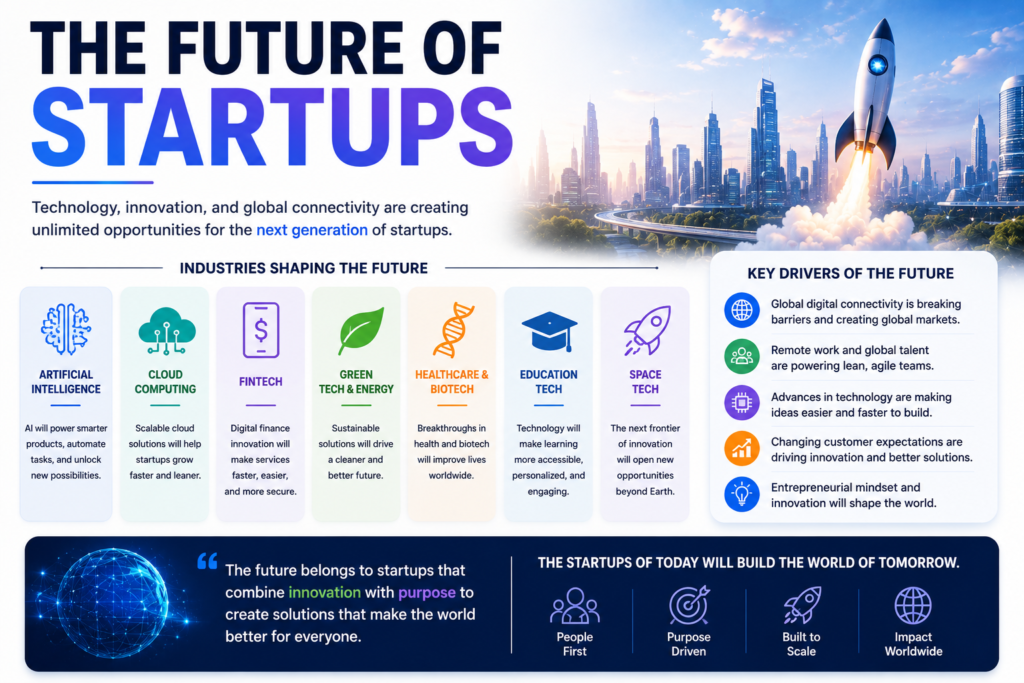
Technology continues to create exciting opportunities for entrepreneurs.
Artificial Intelligence, automation, cloud computing, biotechnology, fintech, renewable energy, and space technology are driving the next generation of startups.
Remote work and global digital platforms also allow founders to build companies that serve customers worldwide without requiring large physical offices.
The startups that combine innovation with customer-focused solutions will shape the future of business.
Frequently Asked Questions
What is a startup in simple words?
A startup is a new business built to solve problems through innovative ideas while aiming for rapid growth.
Is every new business a startup?
No.
Some new businesses are traditional small businesses, while startups focus on innovation and scalability.
Why do startups need investors?
Many startups require funding to develop products, hire employees, and expand quickly.
Can one person start a startup?
Yes.
Many successful startups began with a single founder before growing into larger companies.
What industries have the most startups?
Common startup industries include:
- Technology
- Artificial Intelligence
- Fintech
- Healthcare
- E-commerce
- Education
- Renewable Energy
Conclusion
Startups are transforming industries by introducing innovative solutions and challenging traditional business models. While building a startup involves risks, it also offers opportunities for rapid growth, global reach, and meaningful impact.
Understanding how startups work—from funding and scalability to customer validation and product development—can help aspiring entrepreneurs make smarter decisions and prepare for the challenges of building a successful company.