Technology: Powering the Future of Innovation
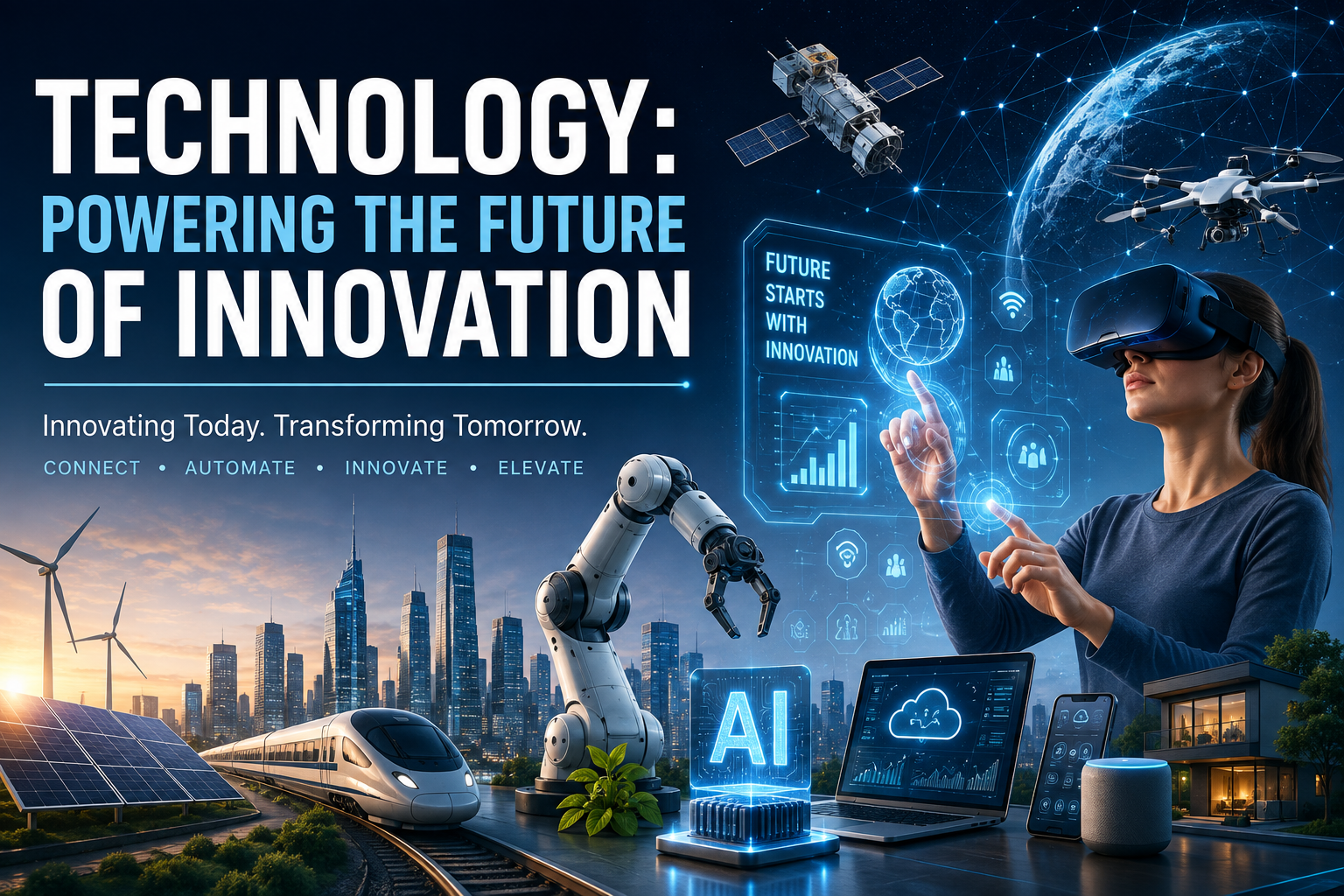
Technology: Powering the Future of Innovation
Introduction
What is technology? Imagine going a single day without your phone, the internet, electricity, GPS, or even household appliances. Modern life would look completely different.
Technology has become the invisible force behind almost everything we do. It helps doctors save lives, businesses serve millions of customers, students learn from anywhere, and families stay connected across continents.
But technology isn’t just about computers or smartphones. It is the continuous process of using knowledge, creativity, and innovation to solve problems and improve everyday life.
Technology Is Everywhere
Technology exists in nearly every part of modern society.
Whether you’re unlocking your phone with facial recognition, paying with a digital wallet, watching a movie online, or navigating with GPS, you’re interacting with technology countless times each day.
Behind every innovation is one goal: making tasks faster, safer, easier, and more efficient.
How Technology Has Evolved
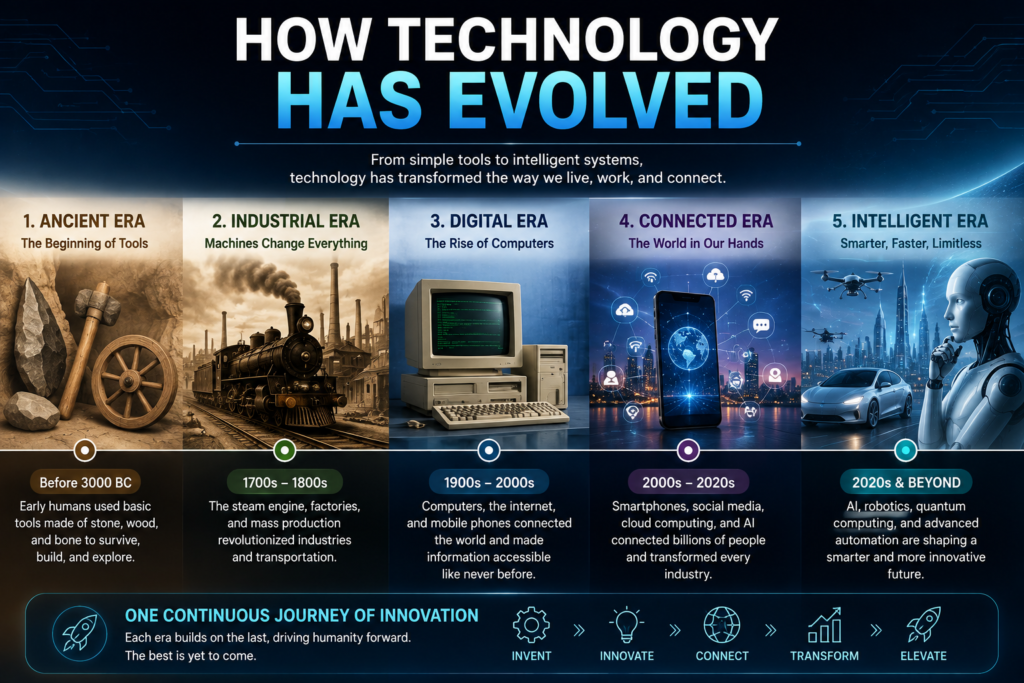
Human innovation has come a long way.
Ancient Era
Simple tools made from stone, wood, and metal helped humans hunt, build, and survive.
Industrial Revolution
Machines transformed farming, transportation, and manufacturing, leading to massive economic growth.
Digital Age
Computers, the internet, smartphones, and cloud computing connected billions of people worldwide.
Intelligent Era
Artificial intelligence, robotics, automation, and quantum computing are now shaping the next generation of innovation.
The Technologies That Shape Our Lives
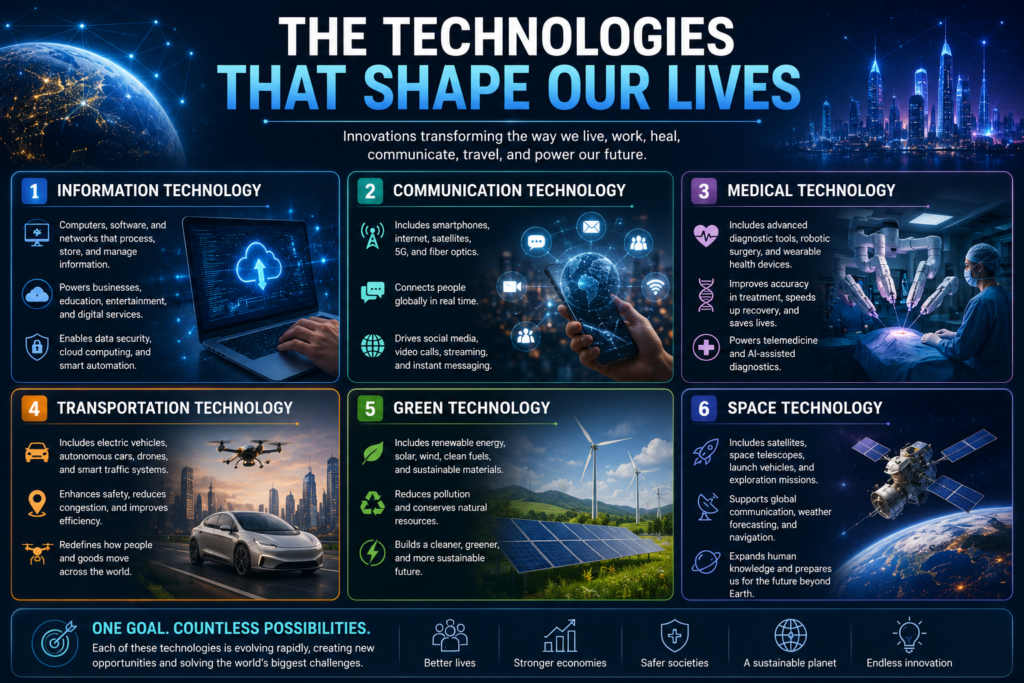
Information Technology
Computers, software, cloud platforms, and digital systems that process information.
Communication Technology
Smartphones, fiber optics, satellites, 5G, and social media platforms that connect people globally.
Medical Technology
MRI scanners, robotic surgery, wearable health devices, telemedicine, and AI-assisted diagnosis.
Transportation Technology
Electric vehicles, autonomous cars, drones, and smart traffic systems.
Green Technology
Solar panels, wind farms, electric batteries, sustainable construction, and clean energy solutions.
Space Technology
Satellites, reusable rockets, space telescopes, and future missions to the Moon and Mars.
Technology in Everyday Life
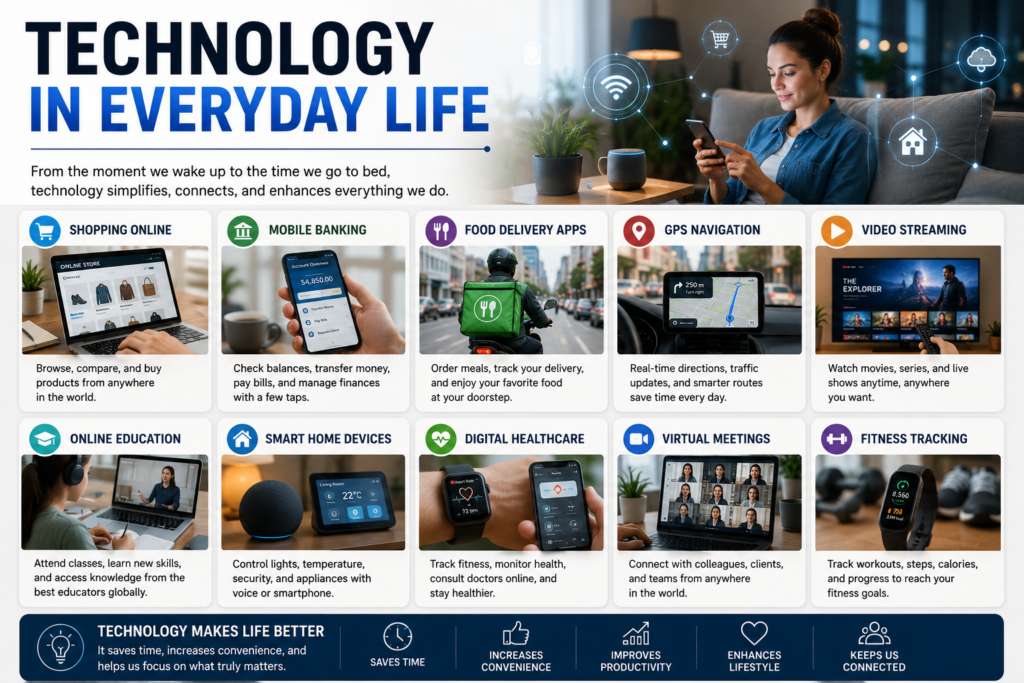
Technology influences almost every daily activity.
- Shopping online
- Mobile banking
- Food delivery apps
- GPS navigation
- Video streaming
- Online education
- Smart home devices
- Digital healthcare
- Virtual meetings
- Fitness tracking
For many people, these tools have become essential rather than optional.
The Bright Side of Innovation
Technology continues to improve lives in remarkable ways.
Faster Communication
Instant messaging and video calls connect people anywhere in the world.
Better Healthcare
Doctors can diagnose diseases earlier and perform more precise treatments.
Smarter Businesses
Automation helps companies reduce costs and improve customer service.
Unlimited Learning
Millions of educational resources are now available online.
New Career Opportunities
Industries such as artificial intelligence, cybersecurity, software engineering, and data science continue to create new jobs.
Challenges in a Digital World
Innovation also brings important challenges.
- Cybersecurity threats
- Online privacy concerns
- Digital addiction
- Misinformation
- Electronic waste
- Automation replacing certain jobs
- Ethical concerns surrounding artificial intelligence
The future depends on balancing innovation with responsible use.
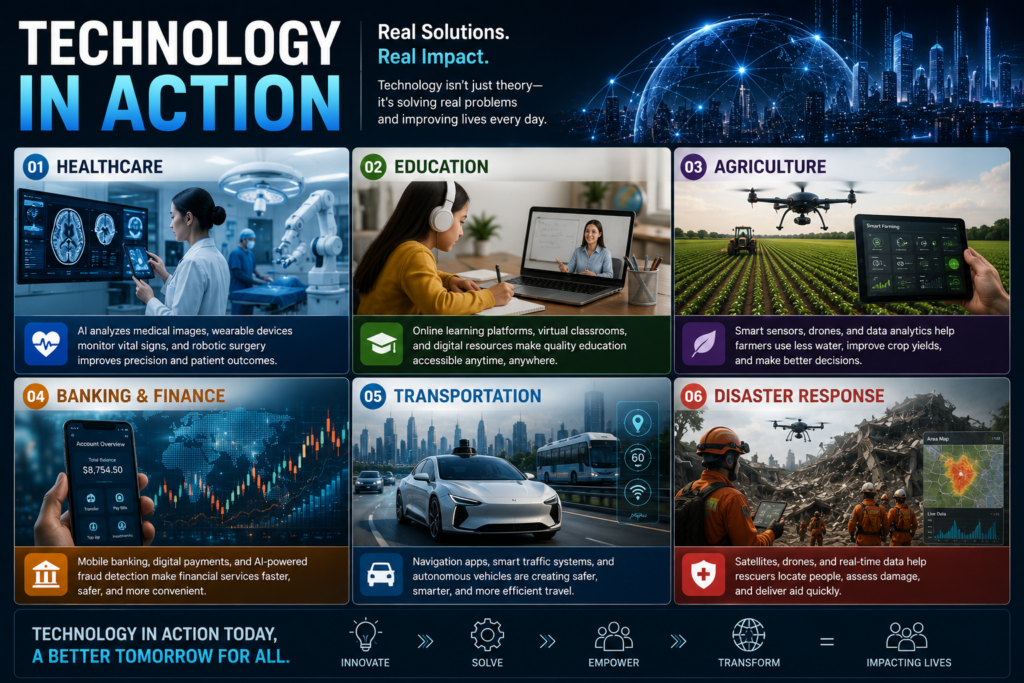
Technology in Action
Healthcare
AI helps doctors detect diseases more quickly.
Education
Students attend live classes from anywhere in the world.
Agriculture
Smart sensors help farmers reduce water usage while increasing crop production.
Banking
People transfer money, invest, and pay bills using mobile apps within seconds.
Disaster Response
Satellites and drones assist emergency teams during floods, earthquakes, and wildfires.
Looking Ahead
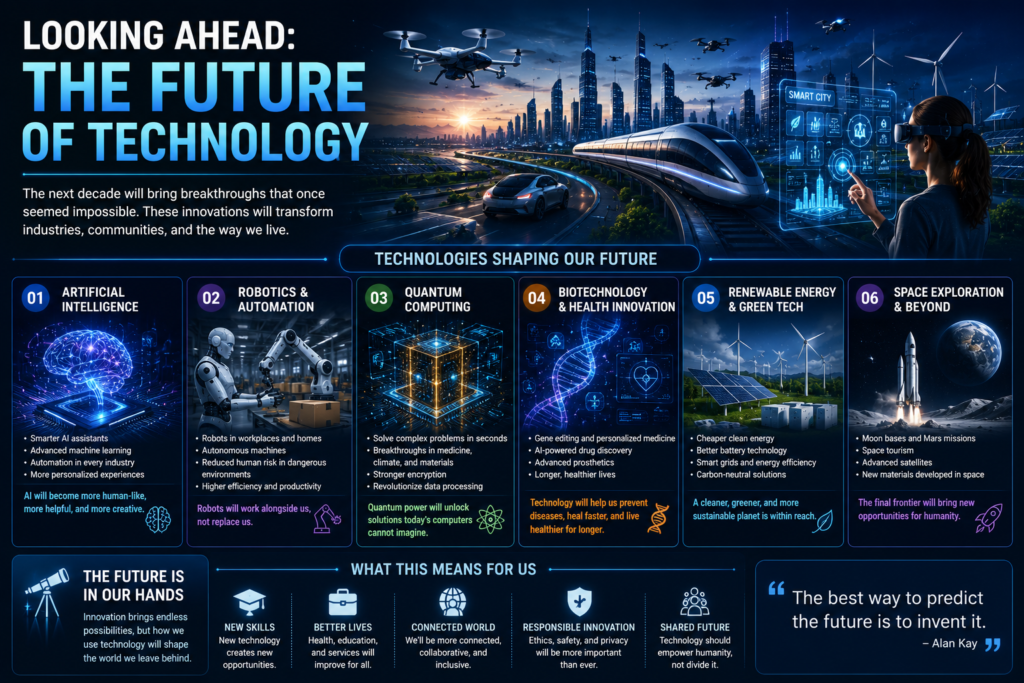
The next decade will introduce technologies that sound like science fiction today.
Artificial intelligence will become more capable, quantum computers may solve problems beyond today’s machines, robots will work alongside humans, and smart cities will become increasingly connected.
Future innovations are expected to improve healthcare, transportation, education, energy, and environmental sustainability while creating entirely new industries.
Technology isn’t slowing down—it’s accelerating.
Frequently Asked Questions
What is technology?
Technology is the practical use of scientific knowledge to create tools, systems, and solutions that improve everyday life.
Why is technology important?
It improves communication, healthcare, education, transportation, business, and countless other aspects of society.
What are the main types of technology?
Information technology, communication technology, medical technology, transportation technology, green technology, and space technology.
What are the disadvantages of technology?
Challenges include cybersecurity risks, privacy issues, misinformation, digital dependence, and electronic waste.
What technologies will shape the future?
Artificial intelligence, robotics, biotechnology, renewable energy, quantum computing, and space exploration are expected to have a major impact.
Final Thoughts
Technology has always been about solving problems, but today it does much more—it connects people, drives innovation, and shapes the future of humanity.
As new breakthroughs continue to emerge, understanding technology will become increasingly valuable. The more we learn about it, the better prepared we’ll be to adapt, innovate, and thrive in a rapidly changing world.