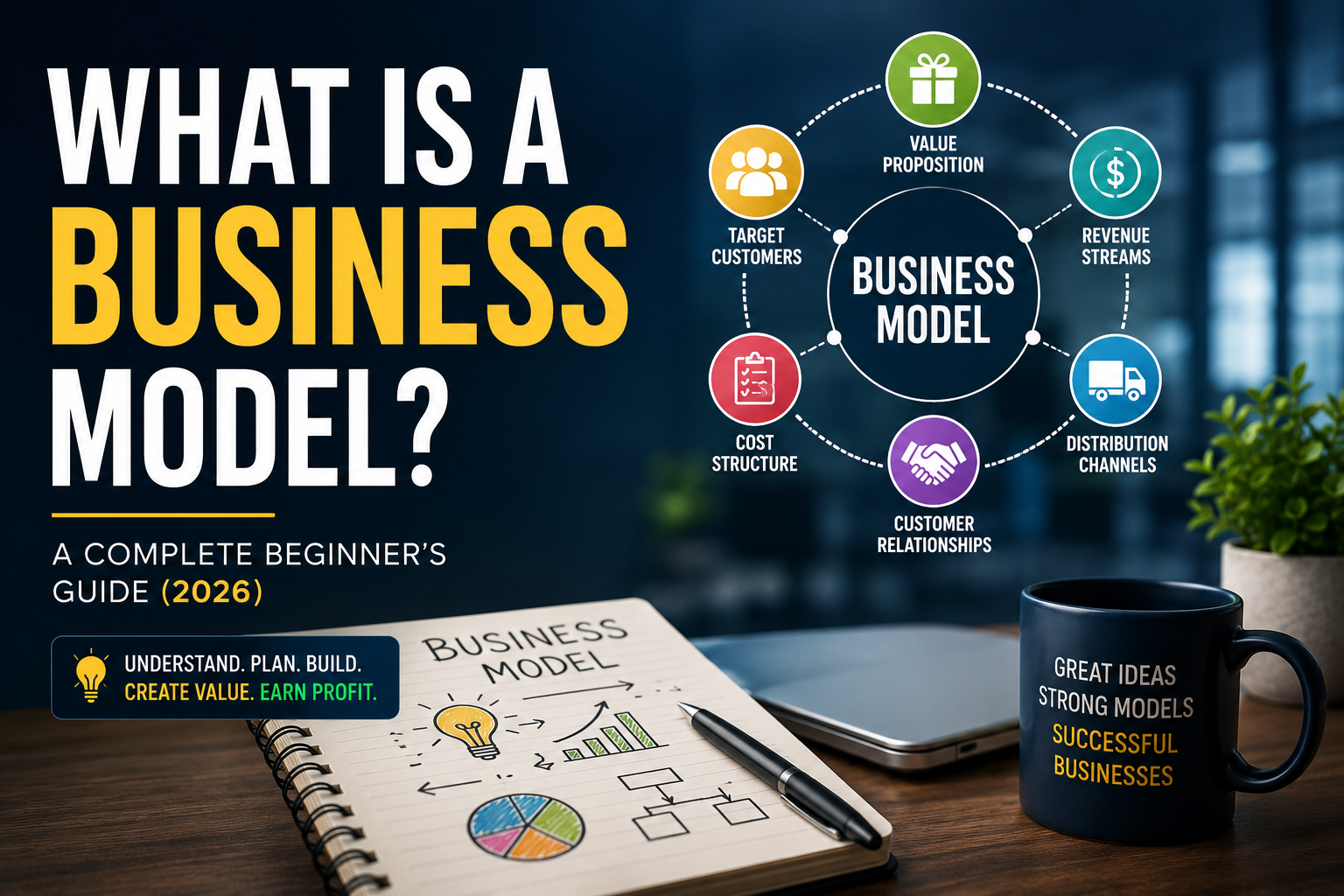
What Is a Business Model? A Complete Beginner’s Guide (2026)
What Is a Business Model? A Complete Beginner’s Guide (2026)
Introduction
Every successful business—from a local coffee shop to global companies like Amazon, Netflix, and Apple—operates using a business model. A business model explains how a company creates value, delivers products or services, attracts customers, and earns revenue.
Whether you’re starting your first business or simply want to understand how companies operate, learning about business models is one of the most important steps in entrepreneurship. A strong business model helps businesses stay profitable, compete effectively, and adapt to changing markets.
In this guide, you’ll learn what a business model is, why it’s important, its key components, common types, real-world examples, and how to choose the best one for your business.
What Is a Business Model?
A business model is a company’s plan for creating value for customers while generating revenue and making a profit. It explains what a business sells, who its customers are, how it delivers its products or services, and how it earns money.
Simply put, a business model answers three important questions:
- What value do we offer?
- Who are our customers?
- How do we make money?
Every business, regardless of its size or industry, follows some type of business model.
Why Is a Business Model Important?
A clear business model helps businesses grow in a sustainable and profitable way.
Provides Clear Direction
A business model acts as a roadmap for business decisions and long-term planning.
Attracts Investors
Investors want to understand how a company plans to generate revenue before investing.
Improves Profitability
Businesses with effective business models can manage costs while increasing revenue.
Creates Competitive Advantage
A unique business model can help a company stand out in competitive markets.
Supports Long-Term Growth
As markets evolve, businesses can improve or adapt their business models to remain successful.
Key Components of a Business Model
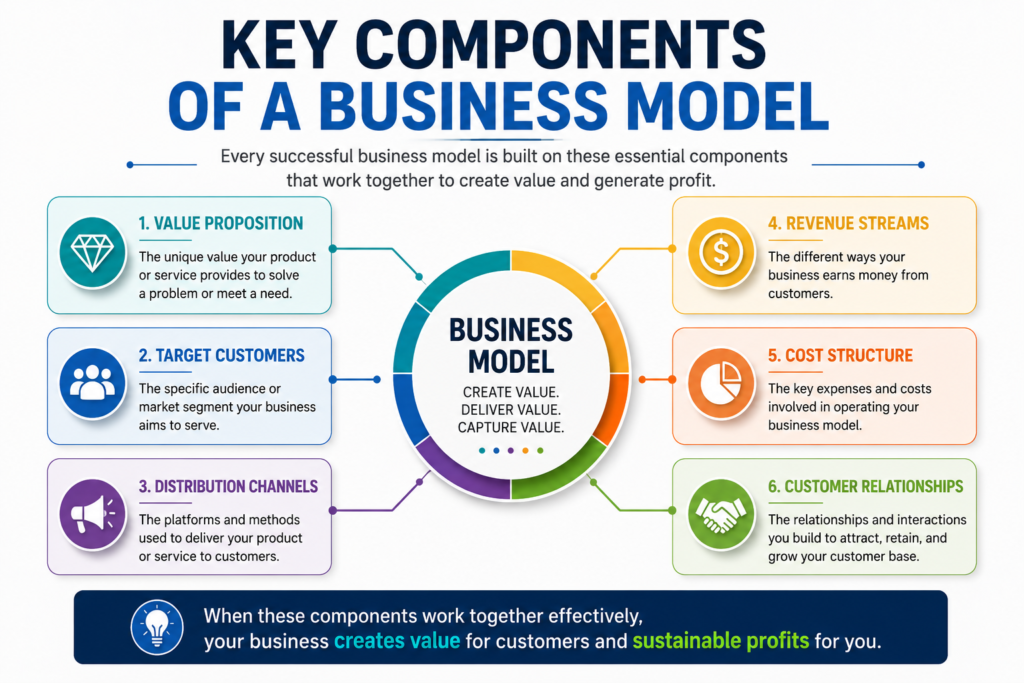
Most successful business models include several important elements.
Value Proposition
The value proposition explains why customers should choose your product or service over competitors.
Target Customers
Every business serves a specific audience with particular needs and preferences.
Revenue Streams
Revenue streams describe how the business earns money.
Examples include:
- Product sales
- Subscription fees
- Advertising
- Consulting services
- Licensing
Cost Structure
Every business has expenses such as employee salaries, marketing, inventory, rent, and technology.
Managing costs is essential for profitability.
Distribution Channels
These are the methods used to deliver products or services to customers.
Examples include:
- Physical stores
- Websites
- Mobile apps
- Online marketplaces
- Direct sales
Customer Relationships
Businesses build long-term success by providing excellent customer service, loyalty programs, and personalized experiences.
Popular Types of Business Models
Businesses use different models depending on their industry and goals.
Retail Business Model
Products are purchased from suppliers and sold directly to consumers.
Example:
Supermarkets and clothing stores.
Subscription Business Model
Customers pay a recurring monthly or yearly fee.
Examples include:
Netflix, Spotify, Microsoft 365.
Freemium Business Model
Basic services are offered for free while premium features require payment.
Examples include:
Dropbox, Canva, Zoom.
E-commerce Business Model
Products are sold online through websites or marketplaces.
Examples include:
Amazon, Shopify stores.
Marketplace Business Model
The platform connects buyers and sellers while earning commissions.
Examples include:
Airbnb, Uber, Fiverr.
Advertising Business Model
Businesses offer free content or services while earning revenue through advertisements.
Examples include:
Google, Facebook, YouTube.
Real-World Examples of Business Models
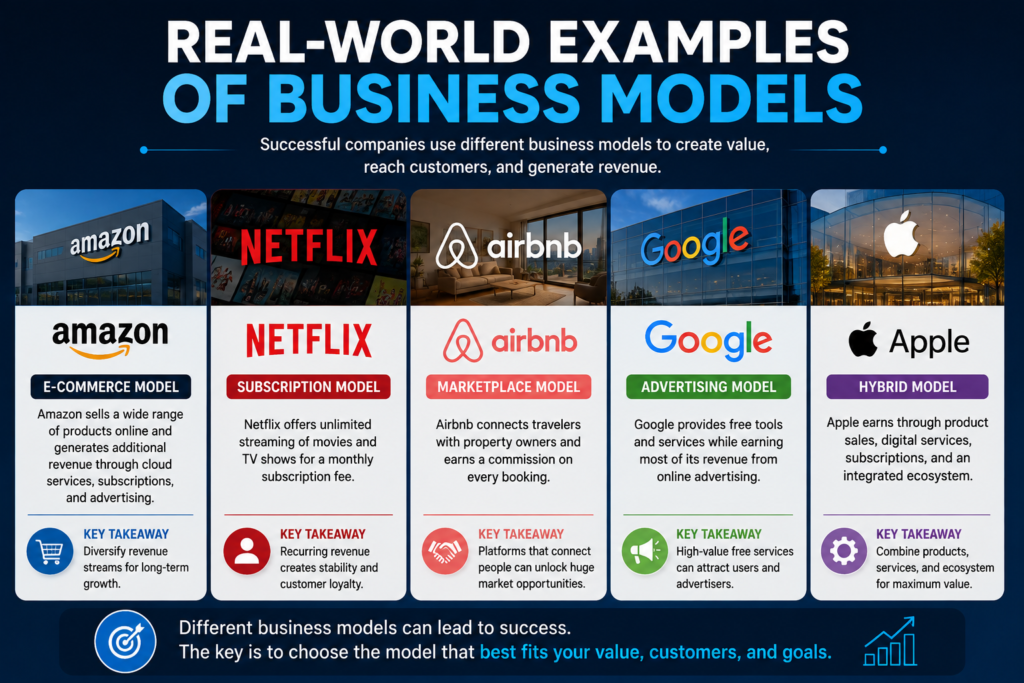
Amazon
Amazon primarily uses an e-commerce business model while also earning revenue from subscriptions, cloud computing, and advertising.
Netflix
Netflix follows a subscription-based model where users pay monthly for unlimited streaming.
Airbnb
Airbnb connects travelers with property owners and earns commission on every booking.
Google provides many free services while generating most of its revenue through advertising.
Apple
Apple combines product sales with subscription services, software, and digital ecosystems.
How to Choose the Right Business Model
Selecting the right business model depends on several factors.
Understand Your Customers
Identify the problems your customers need solved.
Research Competitors
Study how successful businesses in your industry generate revenue.
Calculate Costs
Estimate operating expenses before launching.
Test Your Idea
Start small, collect feedback, and improve your model over time.
Stay Flexible
Markets change quickly, so businesses should adapt when necessary.
Common Mistakes Businesses Make
Avoid these common mistakes when building a business model.
- Trying to serve everyone instead of a specific audience
- Ignoring customer feedback
- Poor pricing strategies
- Underestimating operating costs
- Overcomplicating the business model
- Failing to adapt to market changes
The Future of Business Models
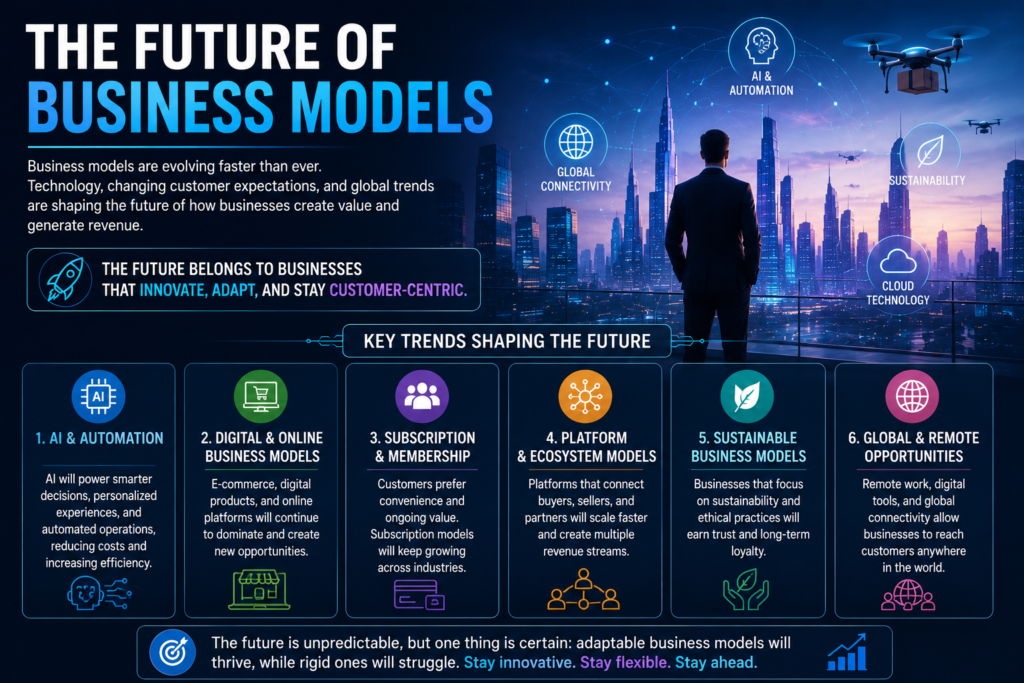
Technology is rapidly changing how businesses operate.
Artificial Intelligence, automation, cloud computing, digital payments, and remote work are enabling companies to reach customers worldwide more efficiently than ever before.
Subscription services, digital products, online marketplaces, and platform-based businesses continue to grow, while AI-powered tools help businesses improve customer experiences and reduce operating costs.
Businesses that embrace innovation and remain flexible will be better positioned for long-term success.
Frequently Asked Questions
What is a business model in simple words?
A business model explains how a company creates value, serves customers, and earns money.
Is a business model the same as a business plan?
No.
A business model explains how the business operates and earns revenue, while a business plan provides detailed strategies, financial forecasts, and operational goals.
Can a business have more than one business model?
Yes.
Many companies combine multiple revenue streams and business models.
For example, Amazon uses e-commerce, subscriptions, advertising, and cloud computing.
Why is a business model important?
A good business model helps businesses generate sustainable revenue, attract investors, and compete effectively.
Can a business model change over time?
Absolutely.
Many successful companies adapt their business models as technology, customer behavior, and markets evolve.
Conclusion
A business model is the foundation of every successful business. It defines how a company creates value, reaches customers, and generates revenue while managing costs effectively.
Understanding different business models helps entrepreneurs make smarter decisions, identify new opportunities, and build sustainable businesses. Whether you’re launching a startup, opening a local business, or creating an online company, choosing the right business model is one of the most important decisions you’ll make.