What Is Marketing? A Complete Beginner’s Guide (2026)
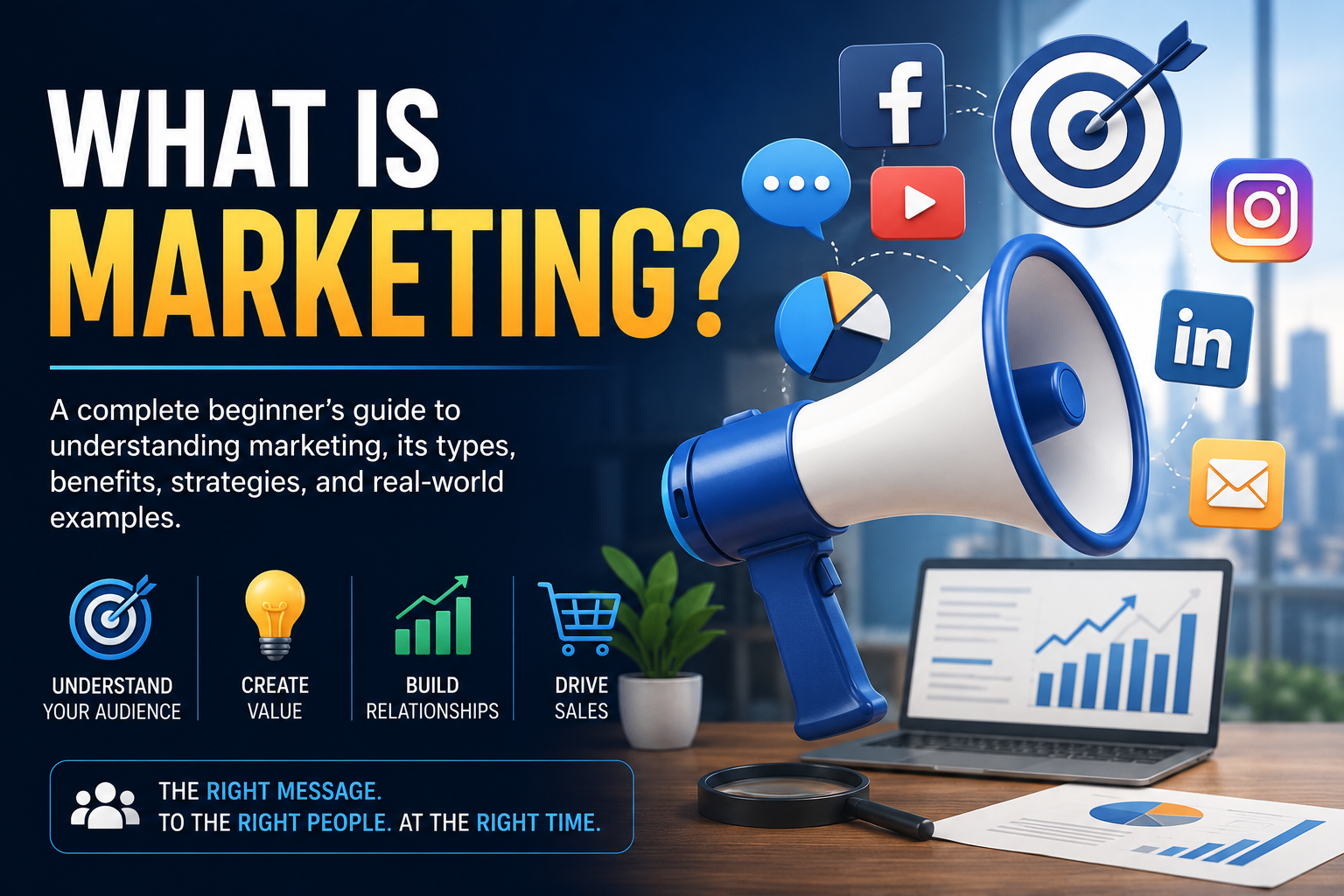
What Is Marketing? A Complete Beginner’s Guide (2026)
Introduction
Marketing is one of the most important factors behind every successful business. Even the best product or service can struggle if people don’t know it exists. Marketing helps businesses connect with customers, build trust, increase brand awareness, and generate sales.
Today, marketing goes far beyond television commercials and newspaper advertisements. Businesses now use websites, social media, search engines, email campaigns, influencers, and artificial intelligence to reach customers around the world.
Whether you’re starting a business, managing a company, or simply curious about how brands attract customers, understanding marketing is essential. This guide explains what marketing is, why it matters, its key principles, different types, and how successful businesses use marketing to grow.
What Is Marketing?
Marketing is the process of promoting, selling, and delivering products or services to customers. It involves understanding customer needs, creating valuable solutions, communicating those benefits, and encouraging people to make a purchase.
In simple terms, marketing is how businesses attract customers and build lasting relationships with them.
Marketing isn’t just about selling—it focuses on creating value, solving problems, and satisfying customer needs.
Why Is Marketing Important?
Marketing plays a major role in every business, regardless of its size.
Builds Brand Awareness
Marketing helps people recognize and remember a business, making it easier for customers to choose it over competitors.
Increases Sales
Effective marketing attracts potential customers and encourages them to buy products or services.
Builds Customer Trust
Consistent communication, valuable content, and quality customer experiences help build long-term trust.
Creates Competitive Advantage
Strong marketing helps businesses stand out in crowded markets by highlighting what makes them unique.
Supports Business Growth
As businesses reach more customers, they can expand into new markets and increase revenue.
The 4 Ps of Marketing
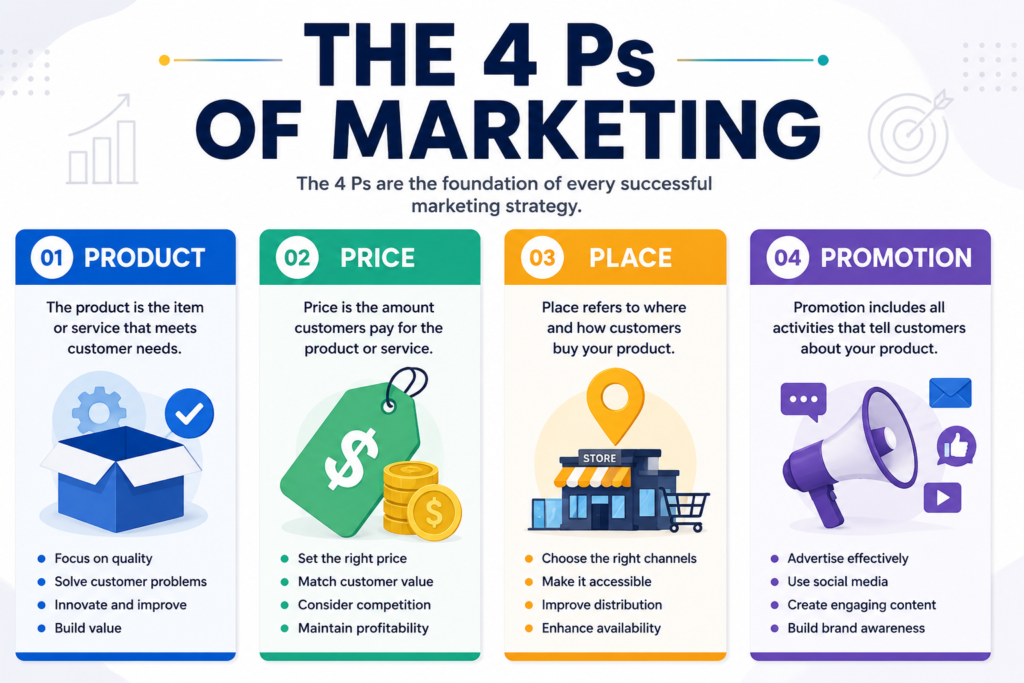
One of the most well-known marketing concepts is the 4 Ps, also called the Marketing Mix.
Product
The product is the item or service offered to customers. Businesses must understand customer needs and provide quality solutions.
Price
Pricing determines how much customers pay. Businesses must balance affordability with profitability.
Place
Place refers to where and how customers purchase products, whether through physical stores, websites, mobile apps, or online marketplaces.
Promotion
Promotion includes all methods used to inform customers about products or services, such as advertising, social media, email marketing, and public relations.
Types of Marketing
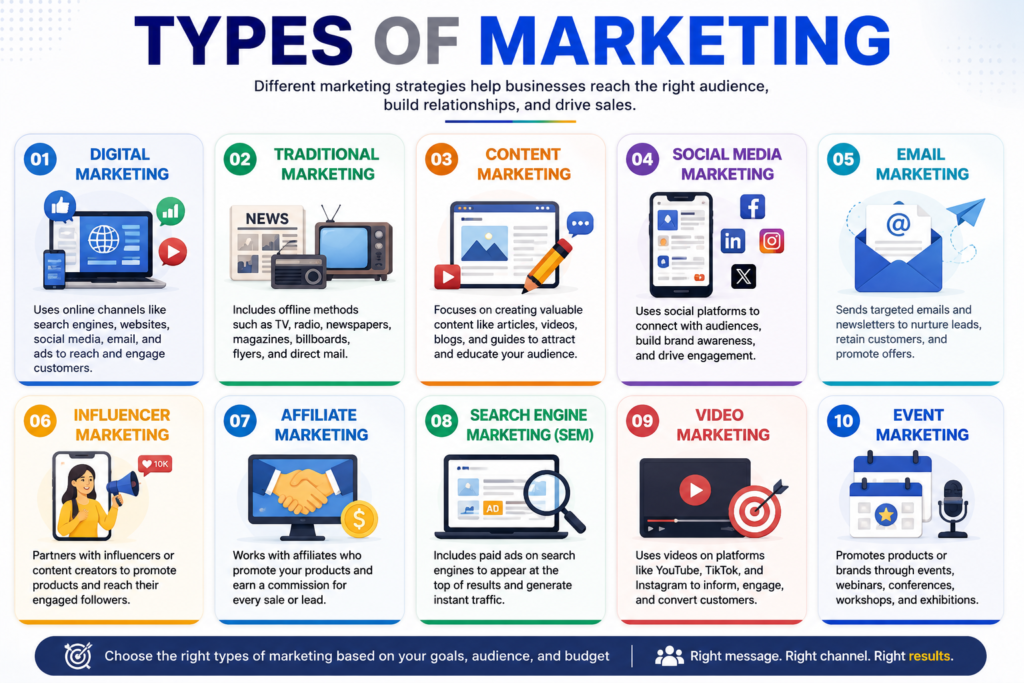
Businesses use different marketing strategies depending on their audience and goals.
Digital Marketing
Digital marketing uses online platforms to promote products and services.
Examples include:
- Search Engine Optimization (SEO)
- Social Media Marketing
- Email Marketing
- Pay-Per-Click (PPC) Advertising
- Content Marketing
Traditional Marketing
Traditional marketing includes offline methods such as:
- Television commercials
- Radio advertisements
- Newspapers
- Magazines
- Billboards
- Flyers
Content Marketing
Businesses create helpful articles, videos, podcasts, and guides to educate customers while building trust.
Social Media Marketing
Companies use platforms like Facebook, Instagram, LinkedIn, TikTok, and X (formerly Twitter) to connect with audiences.
Email Marketing
Businesses send newsletters, promotions, and personalized offers directly to customers.
Influencer Marketing
Brands collaborate with content creators who promote products to their followers.
Digital Marketing vs Traditional Marketing
| Digital Marketing | Traditional Marketing |
|---|---|
| Online platforms | Offline channels |
| Lower starting costs | Often more expensive |
| Easier performance tracking | Limited analytics |
| Global audience | Mostly local or regional |
| Highly targeted campaigns | Broad audience targeting |
Both methods can be effective depending on a business’s goals and target audience.
Real-World Marketing Examples
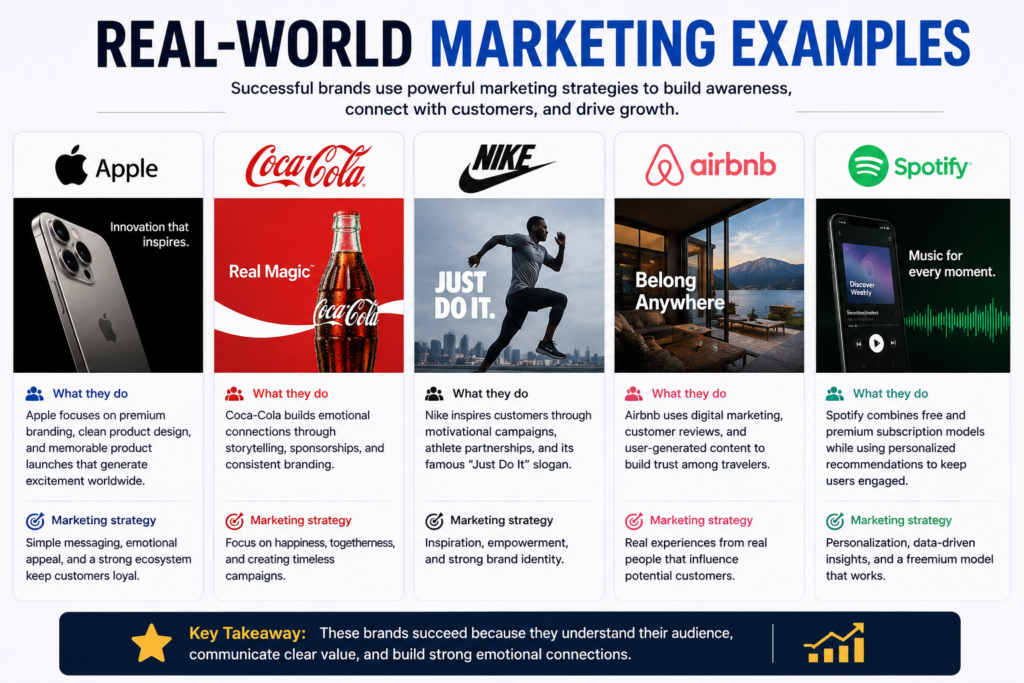
Apple
Apple focuses on premium branding, clean product design, and memorable product launches that generate excitement worldwide.
Coca-Cola
Coca-Cola builds emotional connections through storytelling, sponsorships, and consistent branding.
Nike
Nike inspires customers through motivational campaigns, athlete partnerships, and its famous “Just Do It” slogan.
Airbnb
Airbnb uses digital marketing, customer reviews, and user-generated content to build trust among travelers.
Spotify
Spotify combines free and premium subscription models while using personalized recommendations to keep users engaged.
Common Marketing Mistakes
Many businesses struggle because of avoidable marketing mistakes.
- Not understanding the target audience
- Ignoring customer feedback
- Inconsistent branding
- Focusing only on selling instead of providing value
- Neglecting SEO and content marketing
- Poor social media engagement
- Giving up too early
Avoiding these mistakes can significantly improve long-term marketing success.
The Future of Marketing
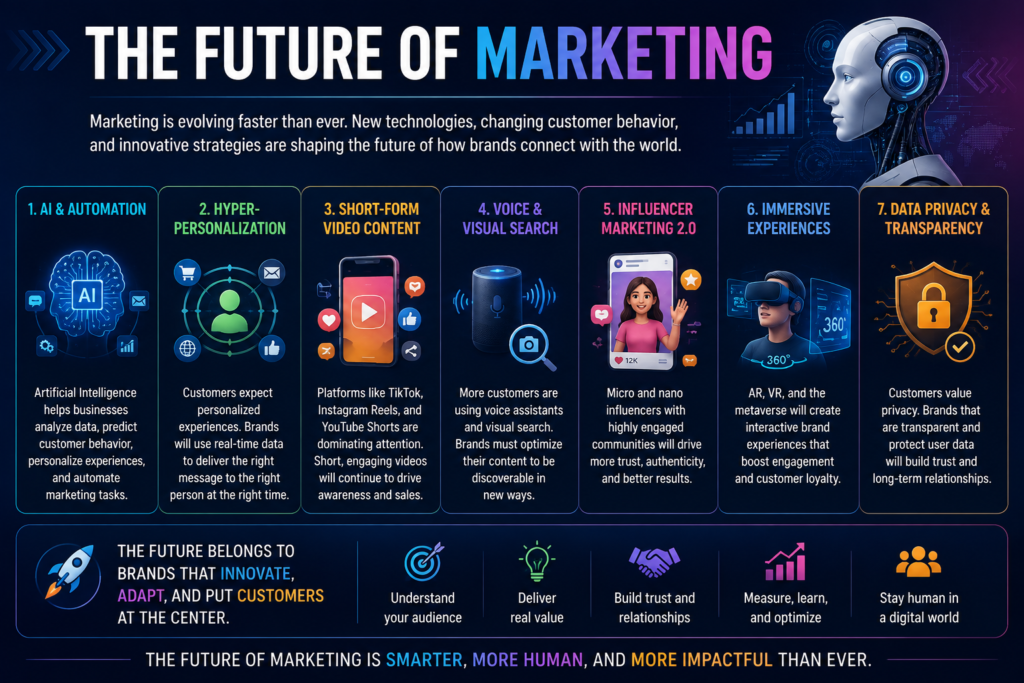
Marketing continues to evolve rapidly with technology.
Artificial Intelligence is helping businesses personalize customer experiences, automate campaigns, and analyze consumer behavior more efficiently.
Voice search, short-form videos, influencer marketing, virtual reality, and data-driven personalization are shaping the future of customer engagement.
Businesses that embrace innovation while maintaining customer trust will remain competitive in the years ahead.
Frequently Asked Questions
What is marketing in simple words?
Marketing is the process of promoting products or services to attract customers and increase sales.
Why is marketing important?
Marketing helps businesses build awareness, attract customers, increase revenue, and grow over time.
What are the 4 Ps of marketing?
The 4 Ps are:
- Product
- Price
- Place
- Promotion
These four elements form the foundation of successful marketing strategies.
What is digital marketing?
Digital marketing involves promoting products and services using online platforms such as websites, search engines, social media, and email.
Can small businesses benefit from marketing?
Yes. Even simple marketing strategies like local SEO, social media, and content creation can help small businesses attract more customers.
Conclusion
Marketing is far more than advertising—it’s about understanding customers, creating value, and building lasting relationships. From traditional advertising to AI-powered digital campaigns, marketing helps businesses connect with the right audience and achieve sustainable growth.
Whether you’re launching a startup, running a local business, or managing a global brand, understanding the fundamentals of marketing is essential for long-term success. As technology continues to evolve, businesses that adapt their marketing strategies and focus on customer value will be best positioned for future growth.