What Is Branding? A Complete Beginner’s Guide (2026)
What Is Branding? A Complete Beginner’s Guide (2026)
Introduction
Think about companies like Apple, Nike, Coca-Cola, or Tesla. Before you even see their products, you probably recognize their logos, colors, slogans, or reputation. That recognition is the result of strong branding.
Branding is much more than a logo or a catchy slogan. It shapes how customers perceive a business and influences whether they choose one company over another. A strong brand builds trust, creates emotional connections, and helps businesses stand out in competitive markets.
Whether you’re launching a startup, opening a local business, or building an online store, understanding branding is essential for long-term success.
In this guide, you’ll learn what branding is, why it’s important, its key elements, common types, real-world examples, and practical steps to build a memorable brand.
What Is Branding?
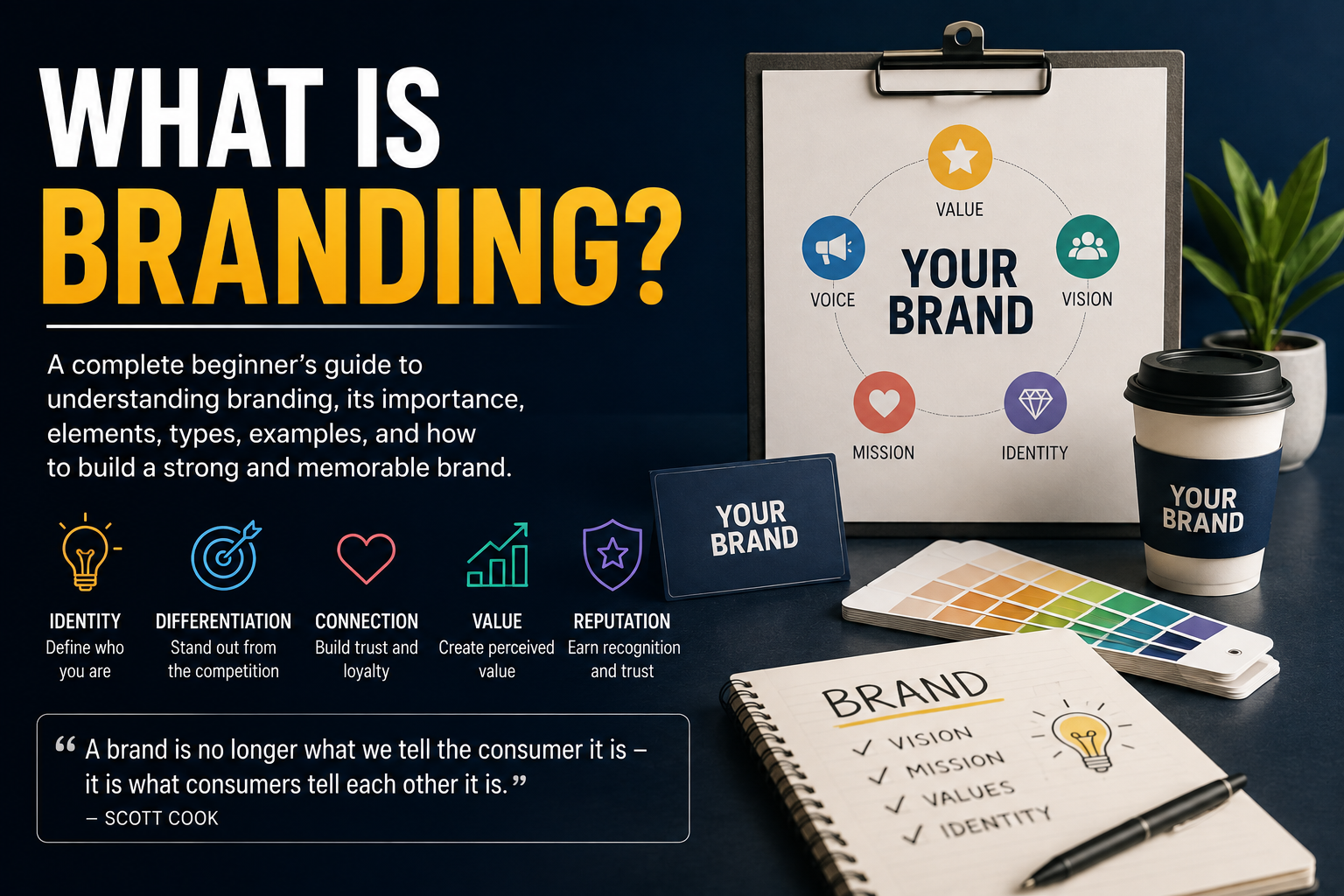
Branding is the process of creating a unique identity for a business, product, or service. It includes everything that influences how customers perceive a company, such as its name, logo, colors, messaging, values, customer experience, and reputation.
Simply put, branding is how people remember and recognize your business.
A strong brand helps customers understand who you are, what you stand for, and why they should choose you instead of your competitors.
Why Is Branding Important?
Branding provides many long-term benefits for businesses.
Builds Trust
Customers are more likely to buy from businesses they recognize and trust.
Creates Recognition
Consistent branding makes it easier for customers to remember your company.
Increases Customer Loyalty
People often return to brands they have positive experiences with.
Differentiates Your Business
Branding helps your business stand out in crowded markets.
Supports Higher Value
Strong brands often justify premium pricing because customers associate them with quality and reliability.
Key Elements of Branding
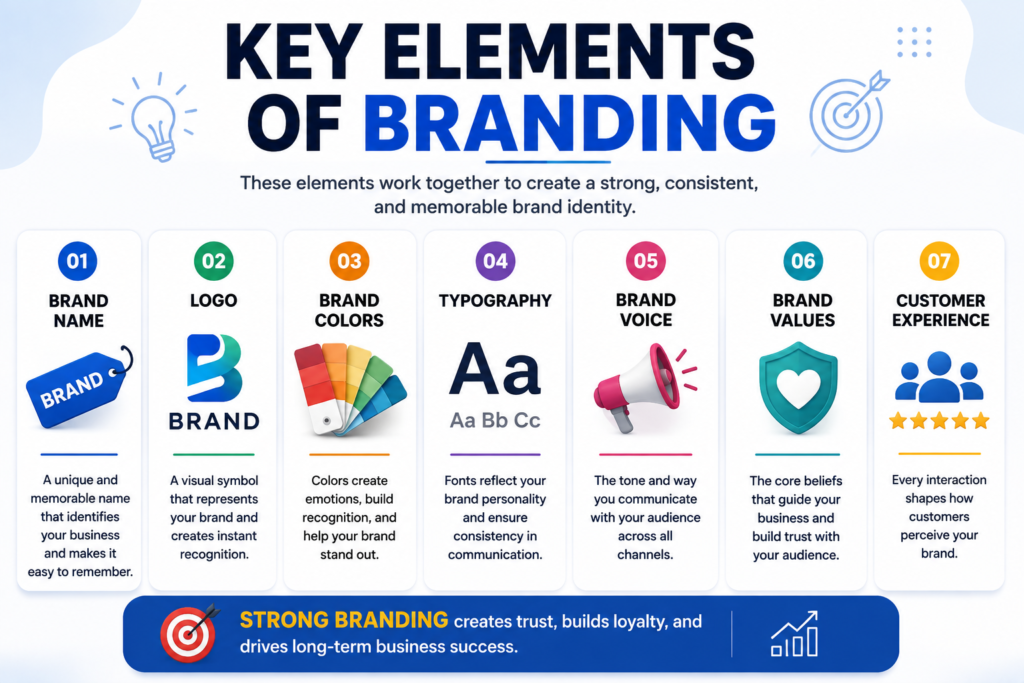
Successful brands combine several important elements.
Brand Name
A memorable and meaningful name helps customers identify your business.
Logo
A professional logo represents your business visually and improves recognition.
Brand Colors
Consistent colors create emotional connections and improve brand recall.
Typography
Fonts contribute to your brand’s personality and visual consistency.
Brand Voice
The way a business communicates with customers should remain consistent across websites, social media, emails, and advertisements.
Brand Values
Customers increasingly support businesses whose values align with their own.
Customer Experience
Every interaction—from visiting a website to receiving customer support—shapes how people view a brand.
Types of Branding
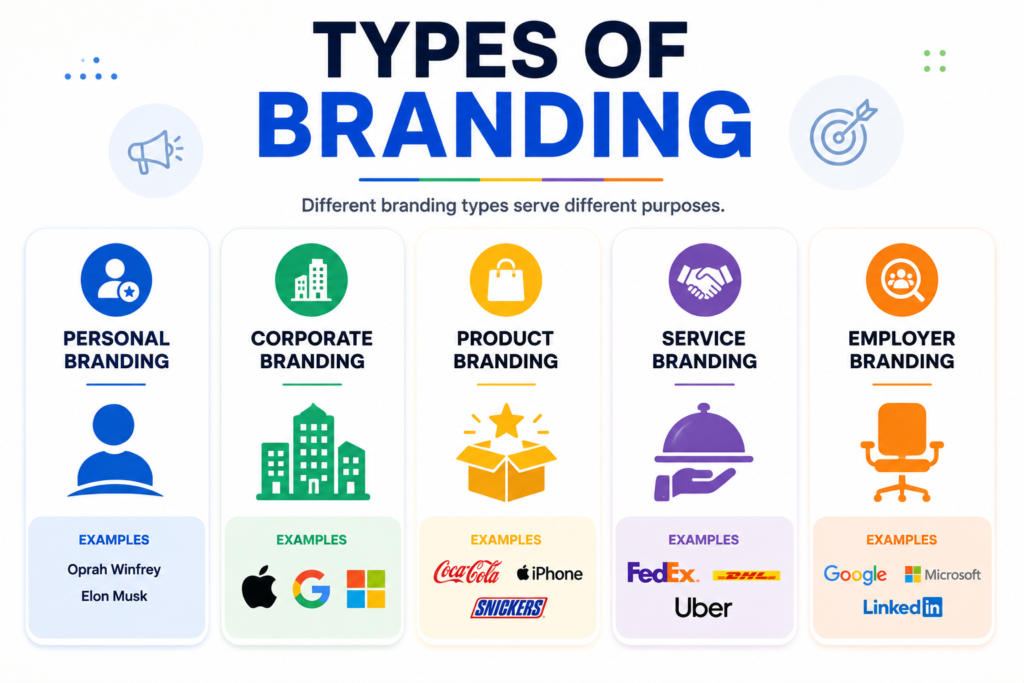
Different businesses use different branding strategies.
Personal Branding
Individuals build their own reputation and professional identity.
Examples include entrepreneurs, authors, and content creators.
Corporate Branding
Large organizations develop consistent identities across all products and services.
Examples include Apple, Google, and Microsoft.
Product Branding
Specific products receive their own identity, even within larger companies.
Example: Coca-Cola owns brands like Sprite and Fanta.
Service Branding
Service-based businesses build trust through customer experience and quality.
Examples include consulting firms, hotels, and airlines.
Employer Branding
Companies build positive reputations to attract talented employees.
Real-World Branding Examples
Apple
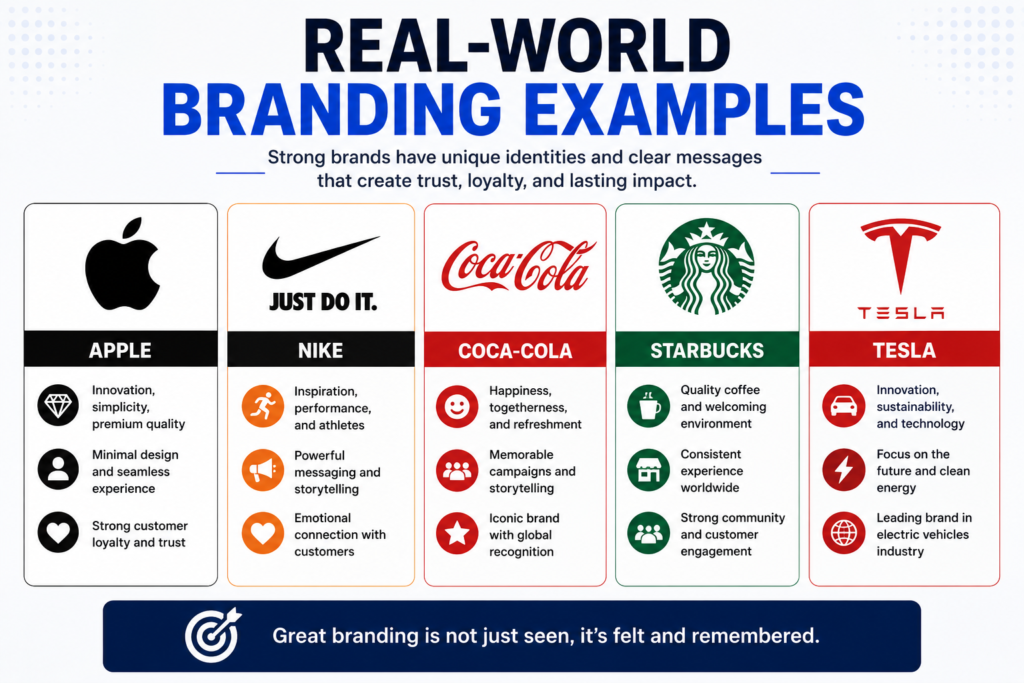
Apple is known for innovation, premium quality, and minimalist design.
Nike
Nike inspires customers through motivation, athletic performance, and the famous “Just Do It” slogan.
Coca-Cola
Coca-Cola focuses on happiness, togetherness, and memorable storytelling.
Starbucks
Starbucks creates a consistent customer experience worldwide through its stores, products, and service.
Tesla
Tesla positions itself as an innovative leader in electric vehicles and sustainable technology.
Common Branding Mistakes
Many businesses weaken their brand by making avoidable mistakes.
- Inconsistent logos or colors
- Poor customer service
- Copying competitors
- Changing branding too frequently
- Unclear messaging
- Ignoring customer feedback
- Making promises the business cannot deliver
Avoiding these mistakes helps build long-term credibility and customer loyalty.
How to Build a Strong Brand
Define Your Mission
Clearly explain why your business exists and what it aims to achieve.
Understand Your Audience
Identify your ideal customers and understand their needs.
Create a Unique Identity
Develop a memorable name, logo, colors, and messaging.
Stay Consistent
Use the same visual style and tone across your website, social media, and marketing materials.
Deliver Quality
A strong reputation depends on consistently providing excellent products and services.
Listen to Customers
Customer feedback helps improve your brand and strengthen relationships.
The Future of Branding
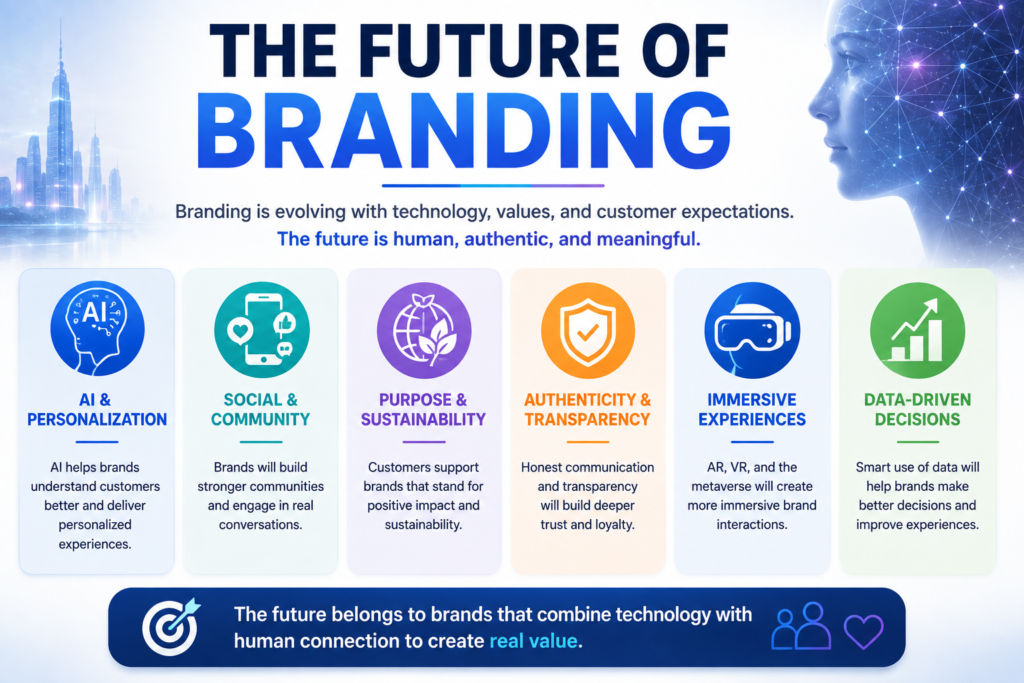
Technology continues to reshape branding.
Artificial Intelligence helps businesses personalize customer experiences, while social media enables brands to connect directly with audiences worldwide.
Customers increasingly value authenticity, transparency, sustainability, and social responsibility. Businesses that communicate honestly and consistently while delivering real value will build stronger relationships in the future.
Successful brands will combine technology with human connection, creating experiences that are both personalized and trustworthy.
Frequently Asked Questions
What is branding in simple words?
Branding is the process of creating a unique identity that helps customers recognize, remember, and trust a business.
Is branding only about logos?
No.
Branding includes your company’s reputation, customer experience, messaging, values, visual identity, and overall perception.
Why is branding important?
Branding builds trust, increases recognition, creates customer loyalty, and helps businesses stand out from competitors.
Can small businesses benefit from branding?
Yes.
Strong branding helps businesses of all sizes attract customers and build lasting relationships.
What’s the difference between branding and marketing?
Branding defines who your business is and how people perceive it.
Marketing is how you promote your products or services to attract customers.
Conclusion
Branding is one of the most valuable assets a business can build. It goes beyond logos and colors to shape how customers think, feel, and interact with a company. A strong brand builds trust, encourages loyalty, and creates lasting competitive advantages.
Whether you’re starting your first business or growing an established company, investing in consistent branding can help you stand out, strengthen customer relationships, and support long-term success in an increasingly competitive marketplace.