What Is Entrepreneurship? A Complete Beginner’s Guide (2026)
What Is Entrepreneurship? A Complete Beginner’s Guide (2026)
Introduction
Entrepreneurship is one of the biggest driving forces behind innovation, economic growth, and job creation. Every successful business—from a small neighborhood café to global companies like Apple, Amazon, and Tesla—started with someone who had an idea and the determination to turn it into reality.
In today’s digital world, entrepreneurship has become more accessible than ever. Whether you’re launching an online store, creating a mobile app, starting a consulting business, or opening a local shop, becoming an entrepreneur offers the opportunity to solve problems, create value, and build financial independence.
In this guide, you’ll learn what entrepreneurship is, why it’s important, the qualities of successful entrepreneurs, different types of entrepreneurship, common challenges, and practical steps to start your own business.
What Is Entrepreneurship?
Entrepreneurship is the process of identifying a business opportunity, developing an idea, and turning it into a profitable venture. An entrepreneur takes calculated risks to create products or services that meet customer needs while generating income.
Unlike employees who work for an organization, entrepreneurs build and manage their own businesses. They make decisions, solve problems, manage finances, and take responsibility for both success and failure.
Entrepreneurship is not limited to large companies. Many entrepreneurs start small businesses, online stores, freelance services, or home-based ventures before expanding.
Who Is an Entrepreneur?

An entrepreneur is a person who creates, manages, and grows a business. Entrepreneurs are known for identifying opportunities, solving problems creatively, and taking initiative to bring their ideas to life.
Some well-known entrepreneurs include:
- Elon Musk
- Jeff Bezos
- Sara Blakely
- Richard Branson
- Jack Ma
While these entrepreneurs built global companies, many successful entrepreneurs operate small businesses that serve their local communities or niche markets.
Why Is Entrepreneurship Important?
Entrepreneurship benefits both individuals and society in many ways.
Creates Jobs
New businesses hire employees, helping reduce unemployment and support economic growth.
Encourages Innovation
Entrepreneurs introduce new products, services, and technologies that improve everyday life.
Boosts the Economy
Successful businesses contribute to national income through taxes, investments, and trade.
Solves Problems
Many businesses are built around solving common customer challenges with better products or services.
Promotes Financial Independence
Entrepreneurship allows individuals to build wealth and create income beyond traditional employment.
Characteristics of Successful Entrepreneurs
Although every entrepreneur is different, many share similar qualities.
Vision
Successful entrepreneurs identify opportunities before others and think about long-term goals.
Creativity
They develop innovative solutions to customer problems.
Risk-Taking
Entrepreneurs accept calculated risks while carefully evaluating potential outcomes.
Leadership
Running a business requires motivating teams, making decisions, and managing people effectively.
Adaptability
Markets constantly change. Entrepreneurs must adapt to new trends, technologies, and customer demands.
Persistence
Building a successful business takes time. Entrepreneurs continue learning and improving despite setbacks.
Types of Entrepreneurship
Entrepreneurship comes in many forms.
Small Business Entrepreneurship
Local businesses such as restaurants, salons, grocery stores, and repair shops.
Startup Entrepreneurship
Businesses designed for rapid growth using innovative ideas and technology.
Examples include software companies and mobile app developers.
Social Entrepreneurship
Businesses focused on solving social or environmental problems while remaining financially sustainable.
Online Entrepreneurship
Digital businesses operating through websites, e-commerce platforms, online education, or digital services.
Franchise Entrepreneurship
Operating an established business model under an existing brand name.
Advantages of Entrepreneurship
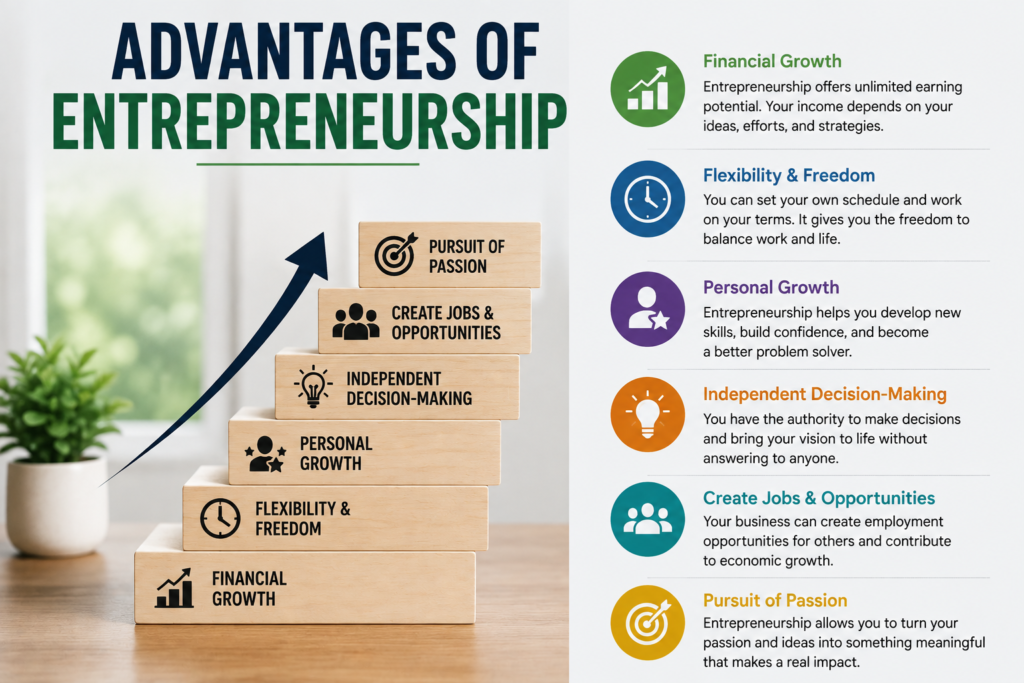
Starting a business offers many benefits.
- Greater earning potential
- Flexible working hours
- Personal and professional growth
- Opportunity to make independent decisions
- Ability to build long-term wealth
- Freedom to pursue your passion
- Chance to create employment opportunities for others
Challenges of Entrepreneurship
Entrepreneurship also comes with responsibilities and risks.
Financial Risk
New businesses require investment and may take time to become profitable.
Uncertain Income
Income often varies, especially during the early stages.
Long Working Hours
Entrepreneurs frequently work beyond regular business hours while growing their companies.
Competition
Businesses compete for customers in increasingly competitive markets.
Decision-Making Pressure
Entrepreneurs are responsible for major business decisions that affect employees, customers, and finances.
How to Become an Entrepreneur
Starting a business involves careful planning.
Step 1: Identify a Problem
Find a product or service that solves a real customer need.
Step 2: Research the Market
Understand your competitors, customers, and industry trends.
Step 3: Create a Business Plan
Define your goals, target audience, pricing strategy, and financial projections.
Step 4: Secure Funding
Use personal savings, investors, business loans, or crowdfunding if necessary.
Step 5: Launch Your Business
Introduce your product or service and begin attracting customers.
Step 6: Learn and Improve
Monitor customer feedback and continuously improve your business.
Common Mistakes New Entrepreneurs Make
Many first-time entrepreneurs face similar challenges.
- Starting without market research
- Ignoring customer feedback
- Poor financial planning
- Trying to do everything alone
- Lack of marketing
- Giving up too quickly
- Expanding too fast
Avoiding these mistakes increases the chances of building a sustainable business.
The Future of Entrepreneurship
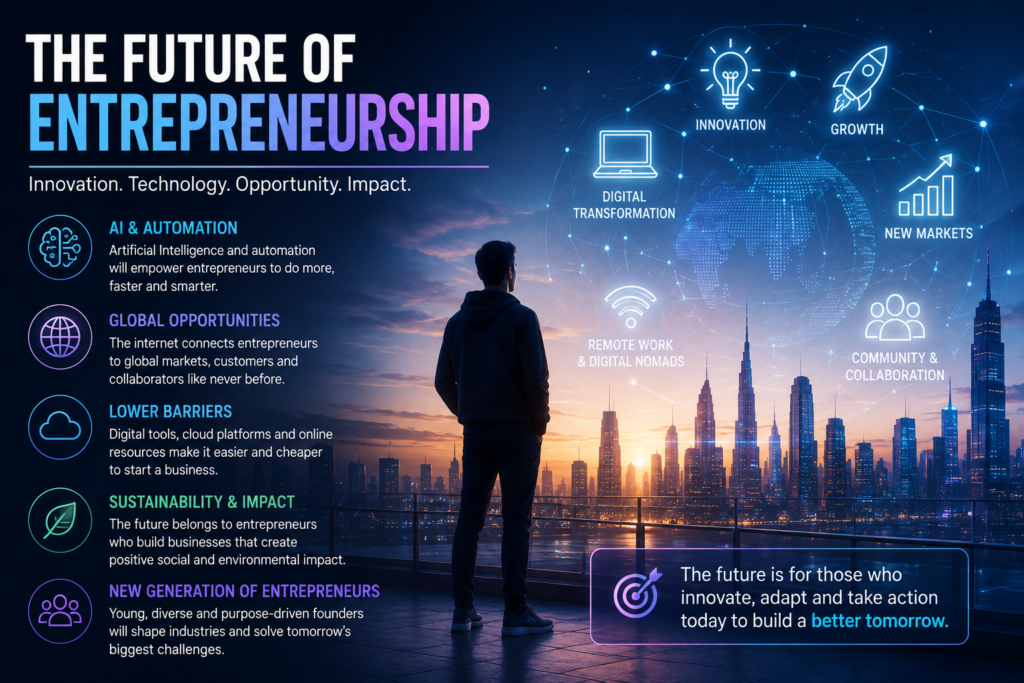
Technology has transformed entrepreneurship. Artificial Intelligence, automation, cloud computing, and digital marketing allow entrepreneurs to reach customers worldwide with fewer barriers than ever before.
Remote work, e-commerce, and online payment systems have also created new opportunities for individuals to launch businesses from almost anywhere.
As technology continues to evolve, entrepreneurship will remain one of the most powerful ways to create innovation, economic growth, and financial independence.
Frequently Asked Questions
What is entrepreneurship in simple words?
Entrepreneurship is the process of starting and managing a business to provide products or services while earning a profit.
Who can become an entrepreneur?
Anyone with a business idea, determination, and willingness to learn can become an entrepreneur. There are no strict educational or age requirements.
Is entrepreneurship risky?
Yes. Every business carries some level of risk, but proper planning, research, and financial management can reduce many of those risks.
What skills do entrepreneurs need?
Successful entrepreneurs benefit from communication, leadership, problem-solving, financial management, adaptability, and decision-making skills.
Can entrepreneurship start online?
Yes. Many entrepreneurs start online businesses such as e-commerce stores, digital agencies, consulting services, online courses, and content platforms.
Conclusion
Entrepreneurship is more than starting a business—it’s about solving problems, creating value, and turning ideas into reality. Entrepreneurs drive innovation, create jobs, and contribute to economic growth while pursuing financial independence and personal fulfillment.
Although entrepreneurship involves challenges and calculated risks, it also offers incredible opportunities for those willing to learn, adapt, and persevere. Whether your goal is to launch a local business or build a global company, understanding the fundamentals of entrepreneurship is the first step toward long-term success.