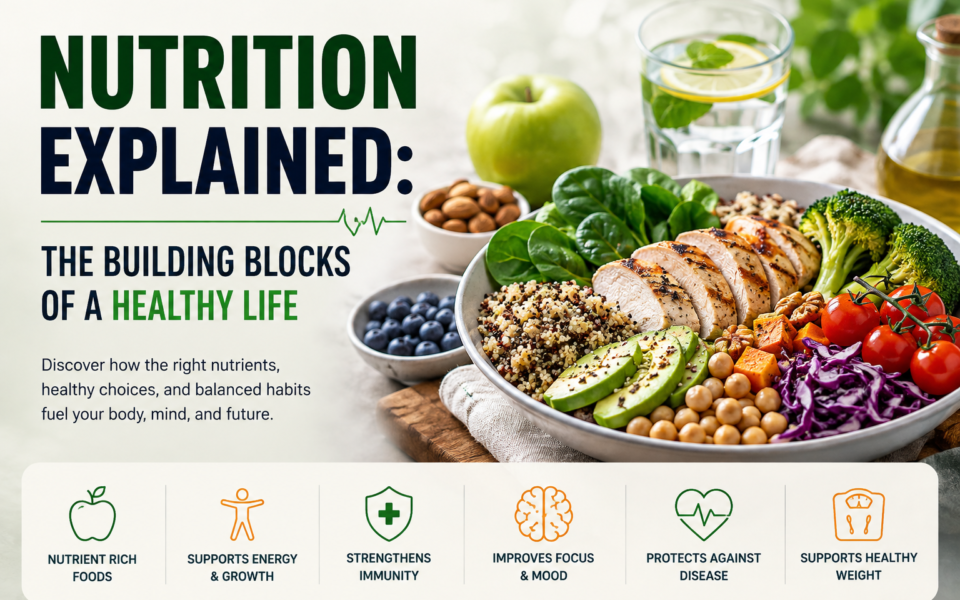
Healthy Eating: A Complete Guide to a Balanced Diet
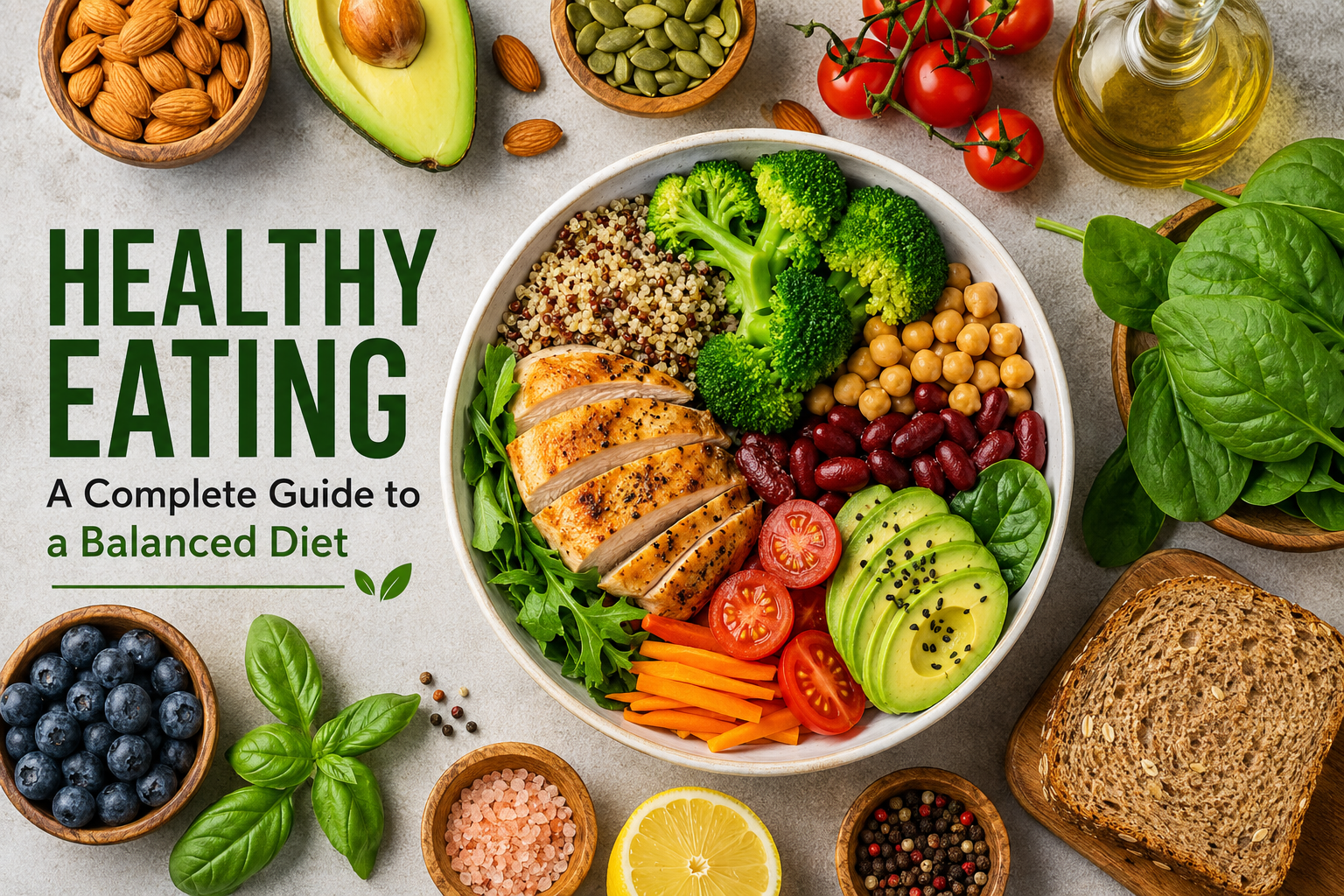
Healthy Eating: A Complete Guide to a Balanced Diet
Healthy eating does not mean following a strict diet, eliminating your favorite foods, or eating perfectly every day. A healthy diet is about giving your body the nutrients it needs while building eating habits that you can realistically maintain over time.
Food provides the energy your body needs to function and the nutrients required for growth, repair, immunity, and overall health. The quality of your everyday food choices can influence your energy levels, digestion, physical performance, and long-term well-being.
With so much conflicting nutrition advice online, knowing what to eat can sometimes feel complicated. Should you avoid carbohydrates? Are all fats unhealthy? How much protein do you need? Is breakfast necessary? What foods should you eat every day?
This guide explains healthy eating and balanced nutrition in simple terms and provides practical strategies you can use to build a healthier diet without making food unnecessarily complicated.
What Is Healthy Eating?
Healthy eating means regularly choosing a variety of foods that provide essential nutrients while limiting excessive amounts of foods that may contribute to poor health when consumed too frequently.
A balanced diet generally includes:
- Fruits and vegetables
- Whole grains and other high-fiber carbohydrates
- Protein-rich foods
- Healthy sources of fats
- Adequate fluids
- A variety of different foods
The goal is not to find one perfect meal or one perfect diet. Instead, think about your overall eating pattern.
One unhealthy meal does not ruin your health, just as one healthy meal cannot compensate for an otherwise poor diet. What matters most is what you consistently do over weeks, months, and years.
Why Is Healthy Eating Important?
Your body requires nutrients to perform almost every basic function.
Protein contributes to maintaining and repairing tissues. Carbohydrates provide an important source of energy. Fats support various functions, including the absorption of certain vitamins. Vitamins and minerals are involved in processes ranging from bone health to normal immune function.
A balanced diet can also make it easier to maintain a healthy body weight and support consistent energy throughout the day.
Healthy eating is not only about preventing illness. It can also help you feel better in everyday life by supporting energy, concentration, digestion, physical performance, and recovery.
The Main Components of a Balanced Diet
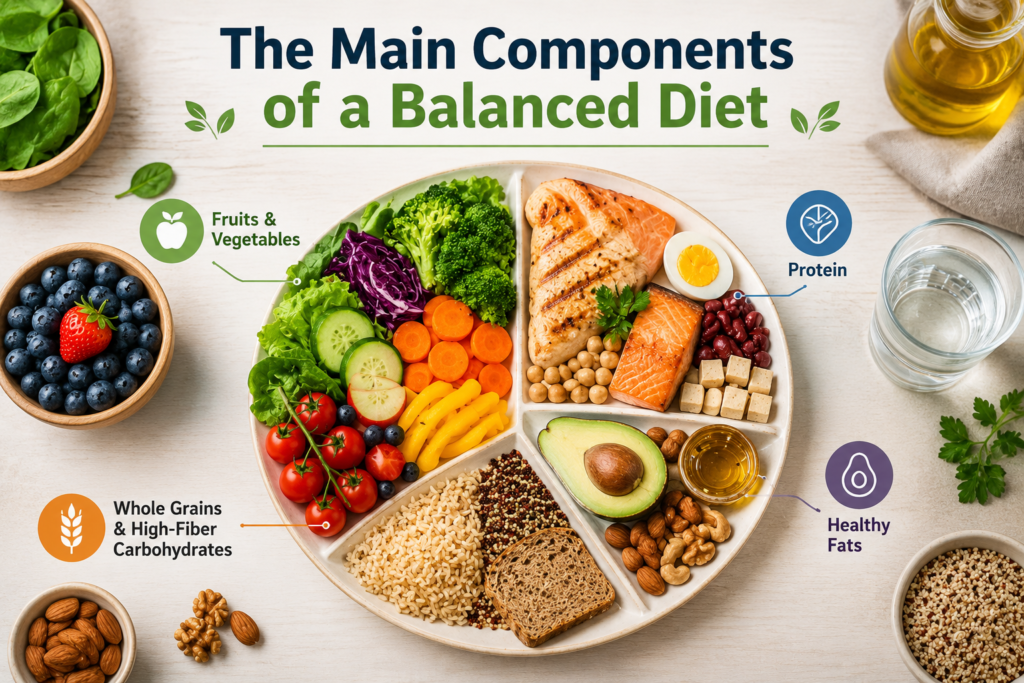
Understanding the basic categories of food makes healthy eating much easier.
1. Fruits and Vegetables
Fruits and vegetables are important sources of vitamins, minerals, fiber, and other beneficial compounds.
Try to include a variety of colors and types rather than eating the same few vegetables every day.
Examples include:
- Apples
- Bananas
- Oranges
- Berries
- Tomatoes
- Carrots
- Spinach
- Broccoli
- Peppers
- Cucumbers
- Beans and other vegetables
Fresh, frozen, and canned fruits and vegetables can all be useful choices. If using canned products, checking labels for added sugar or excessive sodium can help you make better choices.
Instead of thinking about vegetables as something you “have to eat,” try making them part of the main meal.
For example, add vegetables to eggs, sandwiches, rice dishes, pasta, soups, curries, or grilled meals.
2. Whole Grains and High-Fiber Carbohydrates
Carbohydrates are often misunderstood.
Carbohydrates are an important source of energy, and many nutritious foods contain them.
Examples include:
- Oats
- Brown rice
- Whole-grain bread
- Whole-grain pasta
- Potatoes
- Sweet potatoes
- Beans
- Lentils
- Fruits
Whole grains generally contain more fiber and nutrients than refined grains because less of the grain is removed during processing.
Instead of automatically eliminating carbohydrates, focus on choosing better-quality carbohydrate sources and balancing portions with protein, vegetables, and healthy fats.
3. Protein
Protein is essential for maintaining and repairing body tissues and plays many other important roles in the body.
Protein-rich foods include:
- Eggs
- Chicken
- Fish
- Lean meat
- Milk
- Yogurt
- Beans
- Lentils
- Chickpeas
- Nuts
- Seeds
- Tofu and other soy products
You do not necessarily need to get all your protein from one type of food.
Combining different protein sources throughout the week can make your diet more varied and provide a broader range of nutrients.
A simple strategy is to include a protein source in most major meals.
For example, breakfast could include eggs or yogurt, lunch could include chicken or beans, and dinner could include fish, lentils, or another protein source.
4. Healthy Fats
Fat is another nutrient that is often misunderstood.
Your body needs dietary fat, but the type and amount matter.
Foods containing beneficial unsaturated fats include:
- Avocados
- Nuts
- Seeds
- Olive oil
- Certain fish
- Nut butters
Fats are energy-dense, so portions are important. You do not need to eliminate fat to eat healthily.
Instead, focus on including nutritious sources while limiting excessive consumption of foods high in saturated and trans fats.
5. Fiber
Fiber is an important part of a healthy diet and is found primarily in plant foods.
Good sources include:
- Vegetables
- Fruits
- Whole grains
- Beans
- Lentils
- Chickpeas
- Nuts
- Seeds
Fiber supports healthy digestion and can help you feel full after meals.
If your current diet is low in fiber, increase it gradually and drink enough fluids. A sudden large increase can cause digestive discomfort for some people.
How Much Water Should You Drink?
Hydration is another important part of healthy living.
Water is essential for normal body functions, and your fluid requirements can vary depending on factors such as activity level, climate, diet, and individual circumstances.
Instead of obsessing over one universal number, pay attention to thirst and your body’s needs.
Water is generally a simple everyday choice. Other beverages can contribute to fluid intake as well, although drinks containing large amounts of added sugar can add significant calories without providing much nutritional value.
If you exercise heavily or spend significant time in hot weather, your fluid needs may increase.
What Does a Balanced Meal Look Like?
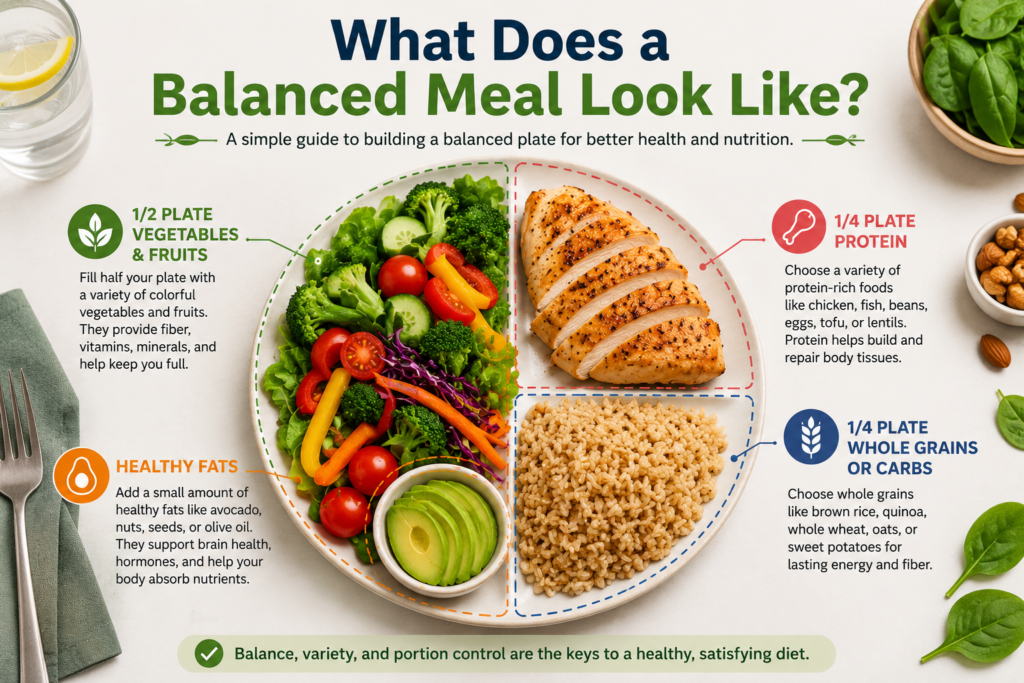
You do not need to calculate every nutrient in every meal.
A simple approach is to build meals around several components.
For example:
Half the plate: vegetables and/or fruit
A substantial portion: protein-rich food
A portion: whole grains or another nutritious carbohydrate
A small amount: healthy fat
This is not a strict mathematical formula. The appropriate proportions can vary depending on your age, activity level, health needs, culture, and personal preferences.
The purpose is simply to encourage variety and balance.
Healthy Eating Does Not Mean Never Eating Treats
One of the biggest mistakes people make when trying to eat healthier is creating extremely restrictive rules.
You may decide:
- “I will never eat dessert.”
- “I will never eat fast food again.”
- “I cannot eat bread.”
- “I must avoid all sugar.”
These rules can be difficult to maintain and may create an unhealthy relationship with food.
A healthier approach is to make nutritious foods the foundation of your diet while allowing room for foods you enjoy.
The overall pattern matters more than occasional treats.
You can enjoy pizza, chocolate, dessert, burgers, or other less nutritious foods while still maintaining a generally healthy eating pattern.
The key is frequency, portion, and balance.
Foods to Eat More Often
If you want to improve your diet, start by adding nutritious foods rather than focusing exclusively on what you need to remove.
Consider eating more:
- Vegetables
- Fruits
- Beans
- Lentils
- Whole grains
- Nuts and seeds
- Fish
- Eggs
- Plain or minimally sweetened dairy products
- Other minimally processed foods
Adding healthier options naturally makes it easier to reduce your dependence on less nutritious foods.
Foods to Limit
No food needs to be labeled “forbidden,” but some foods are better consumed less frequently.
These may include foods and drinks that are high in:
- Added sugars
- Sodium
- Saturated fat
- Trans fat
- Refined carbohydrates
- Excess calories
Examples can include sugary drinks, heavily processed snacks, sweets, and some fast-food meals.
The goal is not perfection. It is to make these foods occasional parts of your diet rather than the foundation of your everyday meals.
Why Highly Processed Foods Can Be a Problem
Not every processed food is unhealthy.
Frozen vegetables, canned beans, yogurt, whole-grain bread, and other processed foods can be nutritious and convenient.
The bigger concern is highly processed foods that are easy to overconsume and contain large amounts of added sugar, sodium, unhealthy fats, or calories while providing relatively little nutritional value.
Rather than worrying about whether something is technically “processed,” look at the overall nutritional quality of the food.
How to Eat Healthy on a Budget
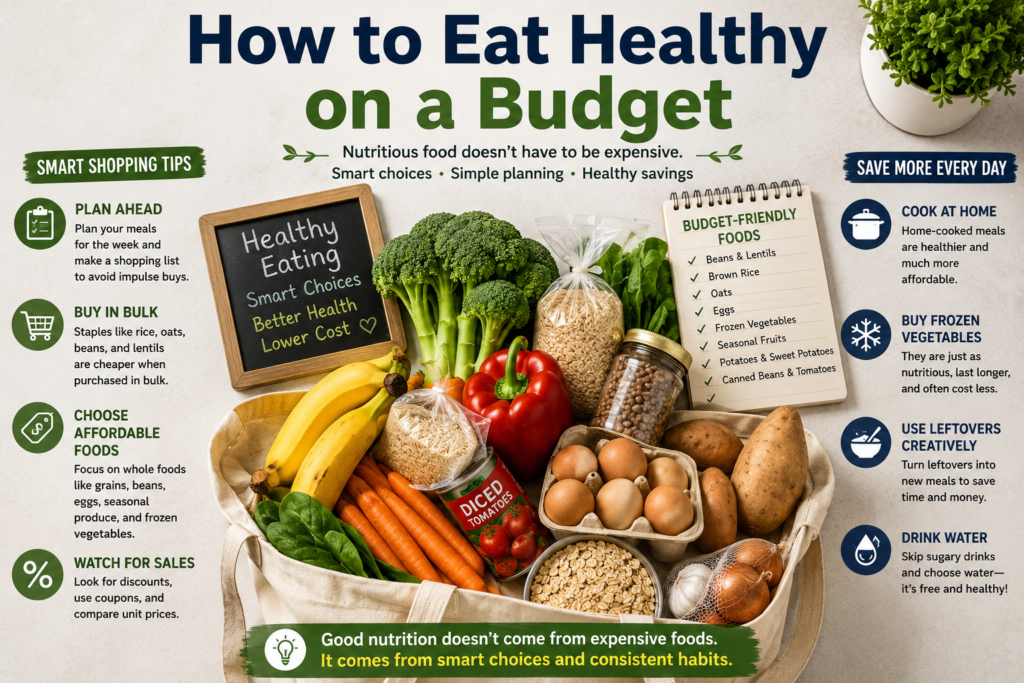
Healthy eating does not have to be expensive.
Some nutritious foods are among the most affordable foods available.
Budget-friendly choices can include:
- Oats
- Rice
- Potatoes
- Beans
- Lentils
- Eggs
- Seasonal vegetables
- Frozen vegetables
- Bananas
- Apples
- Canned fish
- Plain yogurt
Buying larger packages of foods you regularly use can sometimes reduce the cost per serving.
Planning meals before shopping can also prevent unnecessary purchases.
Plan Your Meals Before You Get Hungry
When you are extremely hungry and have no plan, convenience often wins.
A simple weekly meal plan can make healthy eating easier.
You do not need to plan every meal in detail.
Start by deciding:
- Which proteins you will eat
- Which vegetables you will buy
- Which carbohydrate sources you will use
- Which breakfasts are easy to prepare
- Which healthy snacks you will keep available
Then purchase ingredients that can be combined into several different meals.
For example, cooked chicken, rice, vegetables, and beans can be used in bowls, wraps, salads, or other meals.
Build a Healthier Breakfast
There is no universal rule that everyone must eat breakfast.
However, if you prefer breakfast, make it nutritionally useful rather than relying entirely on sugary foods.
Examples include:
- Eggs with whole-grain toast and fruit
- Oatmeal with fruit and nuts
- Plain yogurt with berries and seeds
- Whole-grain toast with eggs
- A smoothie containing fruit, yogurt, and other nutritious ingredients
A combination of protein, fiber, and carbohydrates can help make breakfast more satisfying.
Choose Better Snacks
Snacking is not automatically unhealthy.
The quality and quantity of your snacks matter more.
Instead of always reaching for highly processed snacks, consider keeping options such as:
- Fruit
- Nuts
- Yogurt
- Boiled eggs
- Vegetable sticks
- Hummus
- Whole-grain crackers
- Seeds
You do not have to eliminate chips, cookies, or other treats. Simply avoid making them your only available options.
Learn to Read Food Labels
Food labels can help you understand what you are actually eating.
Look at:
- Serving size
- Calories
- Protein
- Fiber
- Added sugars
- Sodium
- Saturated fat
- Ingredient list
One important point is that the package size is not always the same as the serving size.
A product that appears to contain a small amount of sugar or sodium may contain significantly more if you consume several servings.
Learning to read labels can help you compare similar products and make informed choices.
Portion Size Matters
Even nutritious foods can contribute excessive calories when consumed in very large quantities.
Portion sizes vary depending on the person and the food, so there is no universal perfect serving.
Instead of weighing everything you eat, start paying attention to hunger and fullness.
Eat slowly enough to notice when you are becoming satisfied.
Using smaller plates or bowls can also help some people naturally reduce portions without feeling restricted.
Eat Slowly and Pay Attention to Your Food
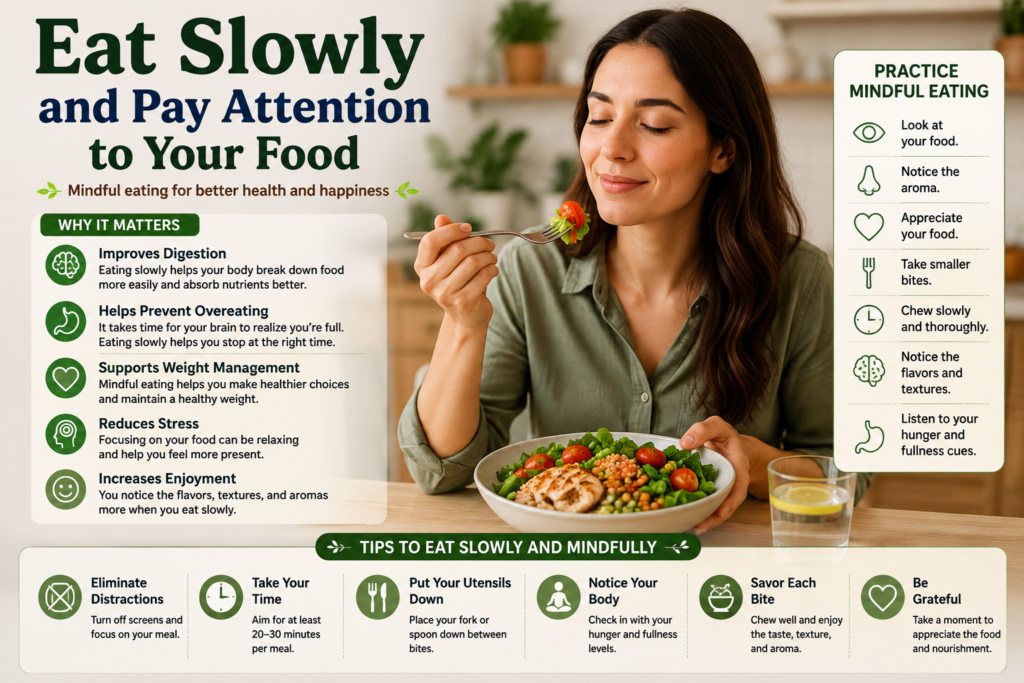
Modern life makes distracted eating extremely common.
You may eat while watching television, scrolling through your phone, working, or driving.
When you are distracted, it can become harder to notice how much you have eaten or whether you are actually still hungry.
Try occasionally eating without screens and paying attention to:
- Taste
- Texture
- Smell
- Hunger
- Fullness
- Portion size
This practice is sometimes referred to as mindful eating.
It does not require meditation or complicated techniques. It simply means paying more attention while eating.
Common Healthy Eating Mistakes
Trying to change everything overnight
Changing your entire diet in one day can be overwhelming.
Start with a few realistic improvements.
Eliminating entire food groups without a reason
Unless medically necessary or professionally advised, there is often no need to completely eliminate major food groups.
Following every nutrition trend
New diets appear constantly online. A popular diet is not automatically a scientifically sound diet.
Focusing only on calories
Calories matter, but nutrition involves much more than calories.
Protein, fiber, vitamins, minerals, food quality, and overall dietary patterns also matter.
Being too restrictive
Extreme restriction can make healthy eating difficult to sustain.
Ignoring hydration
Food receives most of the attention, but adequate fluid intake is also important.
A Simple One-Day Healthy Eating Plan
Here is an example of what a balanced day might look like.
Breakfast
Oatmeal topped with fruit, nuts, and plain yogurt.
Lunch
Grilled chicken or beans with brown rice, mixed vegetables, and a simple salad.
Snack
An apple with a small portion of nuts or yogurt.
Dinner
Fish, chicken, lentils, or another protein source with potatoes or whole grains and plenty of vegetables.
Drinks
Water throughout the day, with other beverages chosen according to personal preference and nutritional needs.
This is only an example. A healthy diet can look very different depending on culture, budget, dietary preferences, allergies, age, activity level, and individual health requirements.
How to Make Healthy Eating a Long-Term Habit
The best diet is one you can maintain.
Instead of asking:
“How can I eat perfectly?”
Ask:
“What healthier choices can I realistically make most days?”
Start with small changes.
You might:
- Add a vegetable to one meal each day.
- Replace one sugary drink with water.
- Eat fruit as a snack.
- Add a protein source to breakfast.
- Choose whole grains more often.
- Cook at home more frequently.
- Plan meals before grocery shopping.
- Keep nutritious foods easily available.
Once a habit becomes normal, add another.
This gradual approach is often easier to maintain than a dramatic diet overhaul.
Healthy Eating and Physical Activity
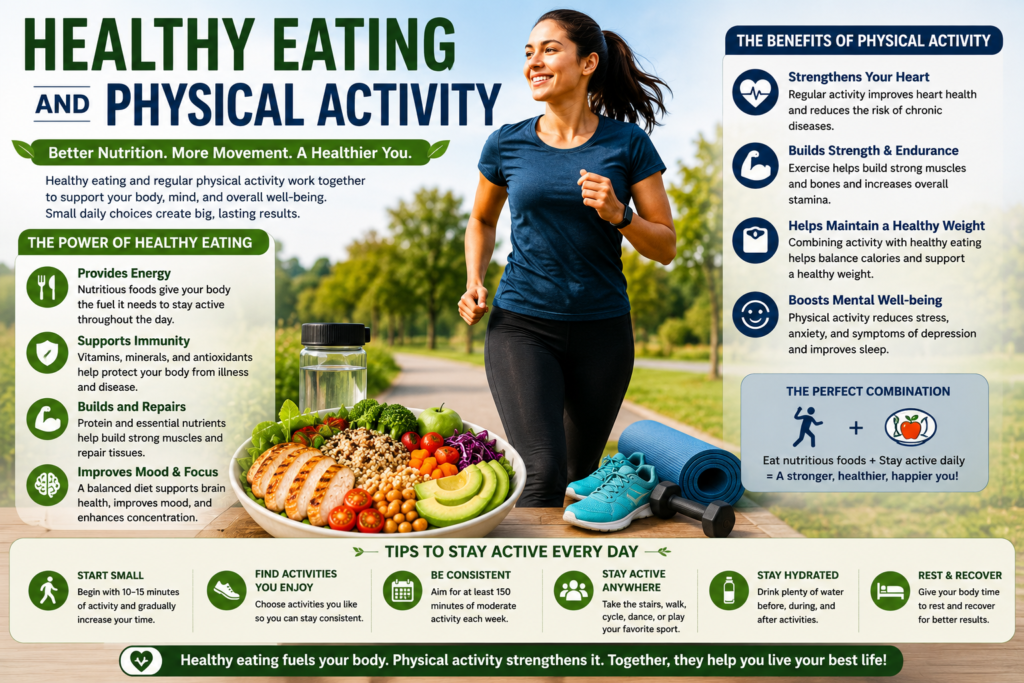
Nutrition and physical activity work together.
A balanced diet provides the nutrients and energy your body needs, while regular physical activity supports cardiovascular fitness, muscle strength, mobility, and overall health.
You do not need to become an athlete.
Walking, cycling, swimming, strength training, sports, dancing, and other forms of movement can all contribute to an active lifestyle.
Choose activities you enjoy because consistency matters.
Does Healthy Eating Mean You Need Supplements?
Not necessarily.
Most people should focus first on obtaining nutrients from a varied diet.
Supplements can be useful in certain situations, but they are not a substitute for a balanced eating pattern.
If you believe you may have a nutrient deficiency or have specific dietary restrictions, speak with a qualified healthcare professional before taking high-dose supplements.
Some supplements can interact with medications or cause problems when taken in excessive amounts.
When Should You Seek Professional Nutrition Advice?
General healthy eating advice is useful for most people, but individual circumstances can require personalized guidance.
Consider speaking with a doctor or registered dietitian if you:
- Have a medical condition affected by diet.
- Have significant food allergies or intolerances.
- Need to follow a medically prescribed diet.
- Are experiencing unexplained changes in weight.
- Have persistent digestive symptoms.
- Are concerned about your relationship with food.
- Are pregnant or breastfeeding and need individualized nutrition guidance.
- Are planning a major dietary change.
Personalized advice can account for your health history, medications, nutritional needs, lifestyle, and goals.
The Bottom Line
Healthy eating is about consistency, variety, and balance—not perfection.
Build your diet around nutritious foods such as vegetables, fruits, whole grains, protein-rich foods, and healthy sources of fat. Drink enough fluids, pay attention to portions, limit highly processed foods and sugary drinks, and make room for foods you genuinely enjoy.
You do not need an extreme diet to eat well.
Start with a few changes that fit your lifestyle and build from there. Over time, those small choices can become normal habits that support your energy, nutrition, physical health, and overall well-being.
A healthy diet is not something you follow for a week or a month. It is a long-term way of nourishing your body.