Nutrition Explained: The Building Blocks of a Healthy Life
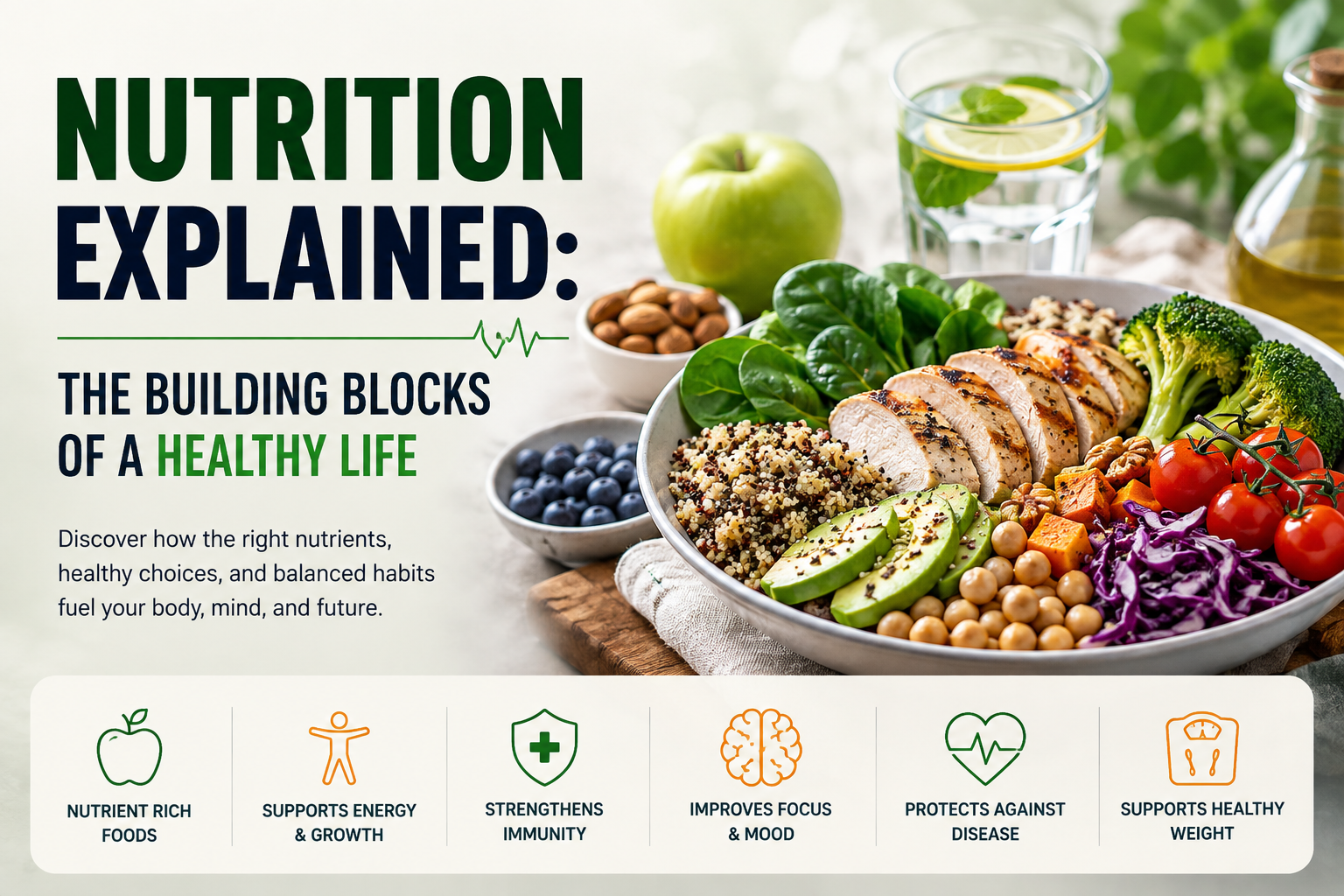
Nutrition Explained: The Building Blocks of a Healthy Life
Introduction
What is nutrition? Every meal you eat provides your body with the fuel it needs to function, grow, and stay healthy. Good nutrition isn’t about following strict diets or avoiding your favorite foods—it’s about giving your body the right balance of nutrients to perform at its best.
The foods you choose every day affect your energy levels, immune system, heart health, brain function, and even your mood. A nutritious diet can lower the risk of many chronic diseases while improving your overall quality of life.
Whether you’re looking to build healthier eating habits or simply understand how food affects your body, learning the basics of nutrition is one of the most valuable investments you can make.
What Is Nutrition?
Nutrition is the process by which your body takes in, absorbs, and uses nutrients from food to produce energy, support growth, repair tissues, and maintain overall health.
Every food you eat contains nutrients that help different parts of your body function properly.
Good nutrition means eating a balanced variety of foods that provide the vitamins, minerals, proteins, carbohydrates, fats, and water your body needs.
Why Nutrition Matters
Healthy eating benefits nearly every part of your body.
Provides Energy
Food supplies the energy your body needs for daily activities.
Supports Growth
Children, teenagers, and adults all require proper nutrition for healthy development and maintenance.
Strengthens Immunity
A balanced diet helps the immune system fight infections and illnesses.
Protects Against Disease
Healthy eating may reduce the risk of heart disease, type 2 diabetes, obesity, and certain cancers.
Improves Brain Function
Proper nutrition supports concentration, memory, and overall cognitive performance.
The Six Essential Nutrients
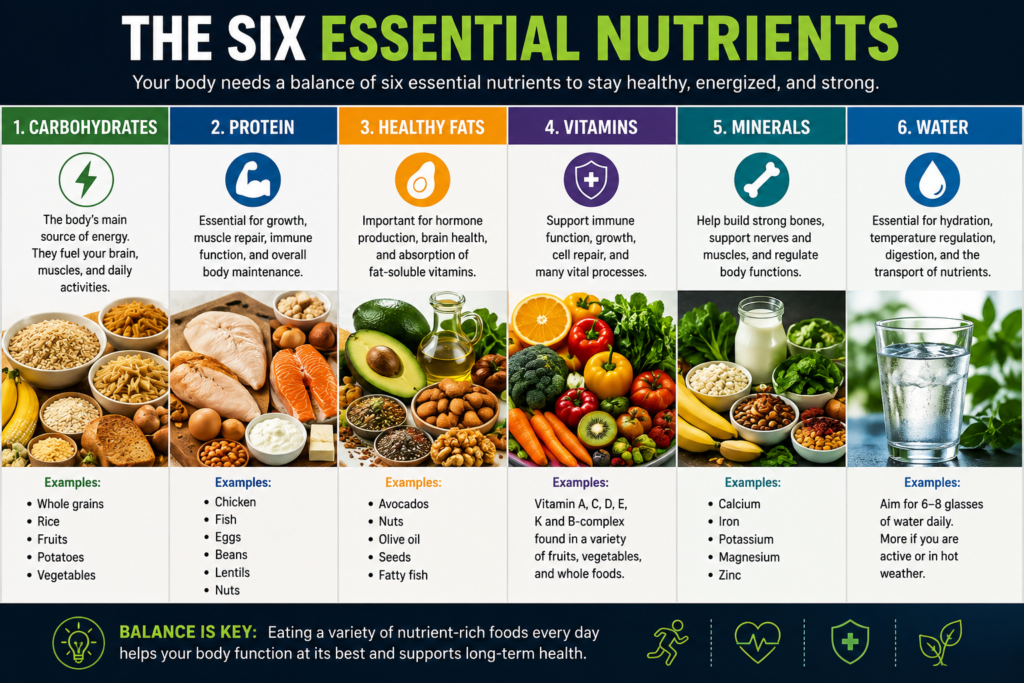
Carbohydrates
The body’s primary source of energy.
Examples:
- Whole grains
- Rice
- Fruits
- Potatoes
Protein
Supports muscle growth and tissue repair.
Examples:
- Chicken
- Fish
- Eggs
- Beans
- Lentils
Healthy Fats
Essential for hormone production, brain health, and vitamin absorption.
Examples:
- Avocados
- Nuts
- Olive oil
- Seeds
Vitamins
Help regulate important body functions and support immunity.
Minerals
Support healthy bones, muscles, nerves, and organs.
Examples include calcium, iron, potassium, and magnesium.
Water
The most essential nutrient for hydration, temperature regulation, and digestion.
Signs of Poor Nutrition
Poor eating habits can affect your body in many ways.
Common signs include:
- Constant fatigue
- Frequent illness
- Poor concentration
- Unhealthy weight changes
- Dry skin
- Weak muscles
- Slow healing
Healthy Eating Habits
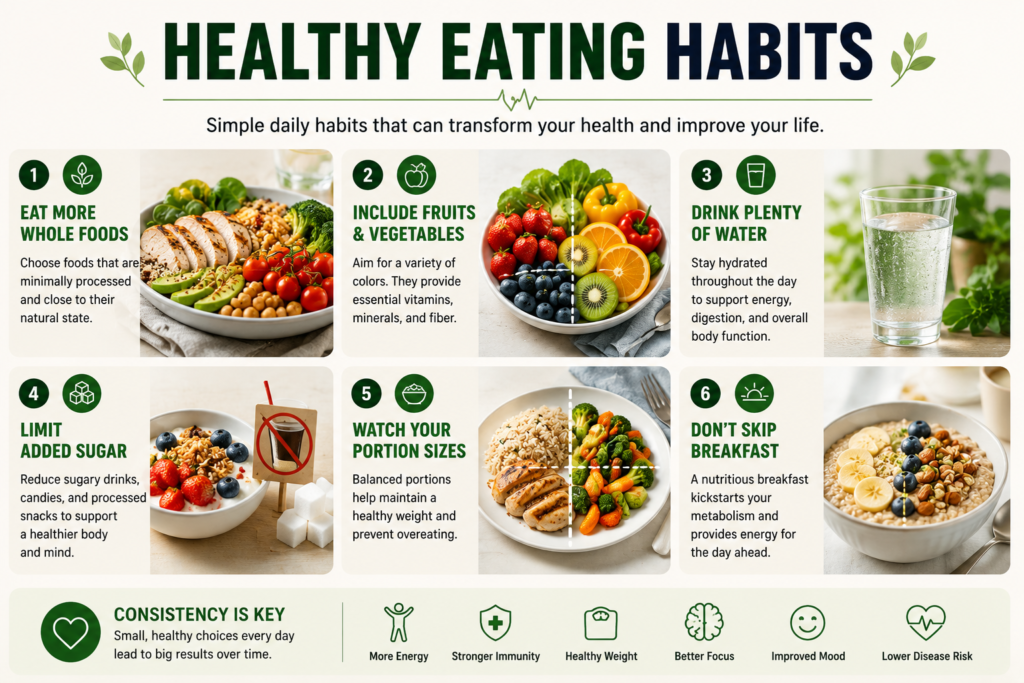
Simple daily habits can improve nutrition.
Eat More Whole Foods
Choose foods that are minimally processed.
Include Fruits and Vegetables
Aim for colorful fruits and vegetables every day.
Drink Plenty of Water
Stay hydrated throughout the day.
Limit Added Sugar
Reduce sugary drinks and highly processed snacks.
Watch Portion Sizes
Balanced portions help maintain a healthy weight.
Don’t Skip Breakfast
A nutritious breakfast provides energy for the day ahead.
Common Nutrition Myths
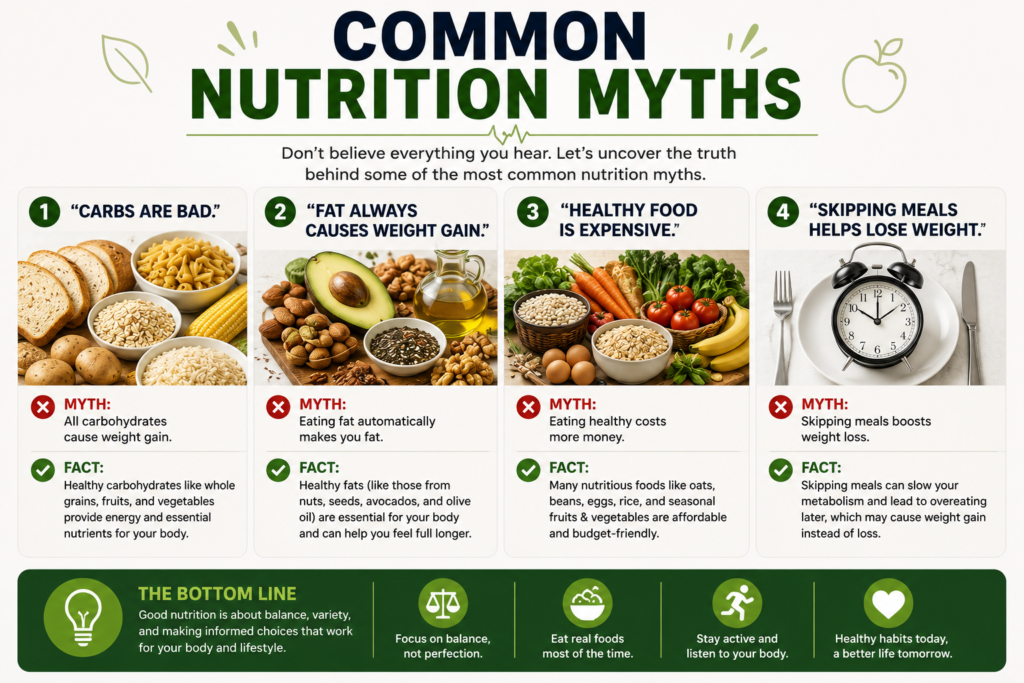
“Carbs are bad.”
Healthy carbohydrates provide important energy and nutrients.
“Fat always causes weight gain.”
Healthy fats are an essential part of a balanced diet.
“Healthy food is expensive.”
Many nutritious foods, such as oats, beans, eggs, and seasonal vegetables, are affordable.
“Skipping meals helps lose weight.”
Skipping meals can lead to overeating later in the day.
Real-Life Examples of Good Nutrition
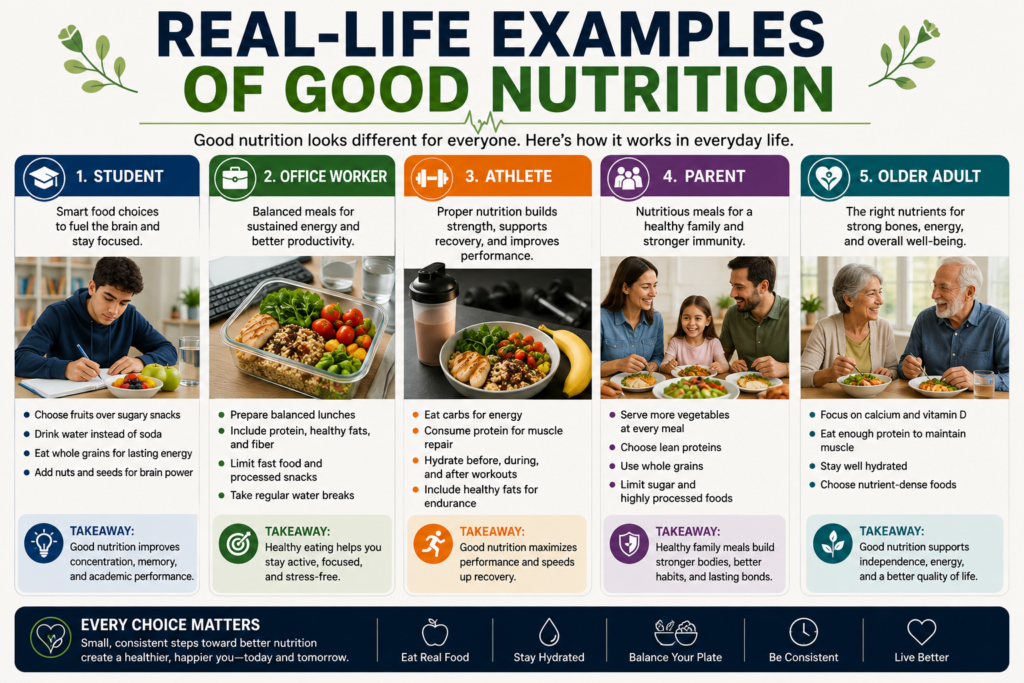
Student
Choosing fruit instead of sugary snacks during study sessions.
Office Worker
Preparing balanced lunches instead of eating fast food every day.
Athlete
Eating protein and carbohydrates after exercise to support recovery.
Parent
Preparing nutritious family meals with vegetables, lean protein, and whole grains.
Older Adult
Focusing on calcium, protein, hydration, and nutrient-rich foods.
The Future of Nutrition
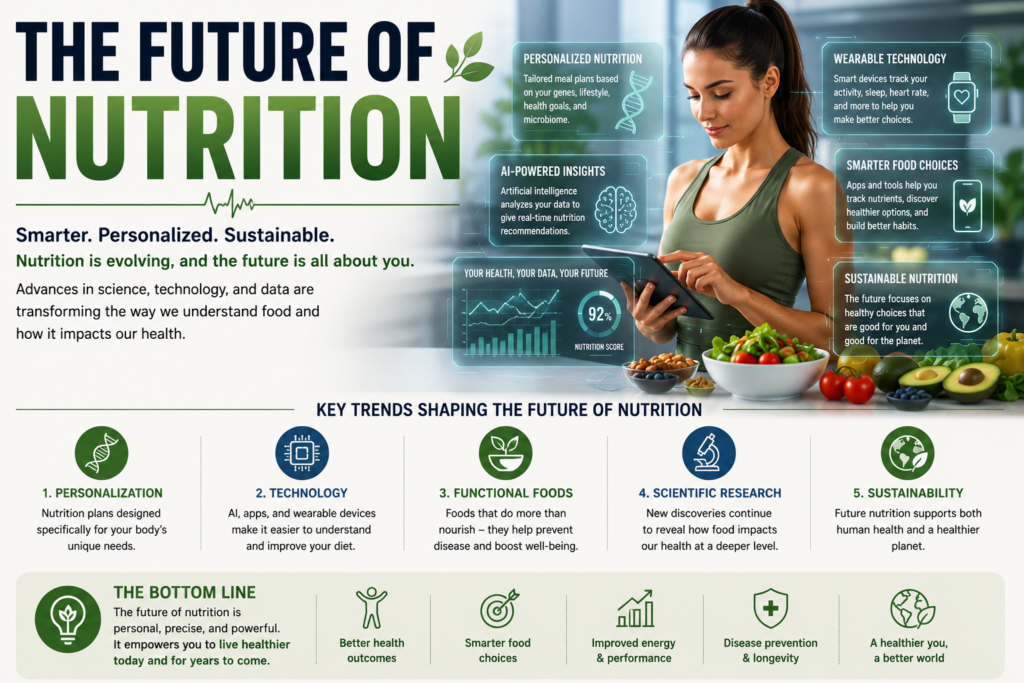
Nutrition is becoming increasingly personalized.
Advances in artificial intelligence, wearable health devices, DNA analysis, and nutrition tracking apps are helping people make smarter food choices based on their individual needs.
Scientists continue to research how diet influences long-term health, allowing healthcare professionals to create more personalized nutrition plans than ever before.
Frequently Asked Questions
What is nutrition?
Nutrition is the process of obtaining and using nutrients from food to support growth, energy, and overall health.
Why is nutrition important?
Good nutrition supports physical health, mental well-being, immunity, and disease prevention.
What are the six essential nutrients?
Carbohydrates, proteins, fats, vitamins, minerals, and water.
How can I improve my nutrition?
Eat balanced meals, include more fruits and vegetables, drink enough water, and limit highly processed foods.
Does healthy eating mean giving up favorite foods?
No. A healthy diet focuses on balance and moderation rather than strict restrictions.
Final Thoughts
Nutrition is one of the strongest foundations of good health. Every meal is an opportunity to nourish your body, improve your energy, and protect your future well-being.
You don’t need a perfect diet to become healthier. Small, consistent improvements in your daily eating habits can create lasting benefits over time.