What Is Financial Planning? A Complete Beginner’s Guide (2026)

What Is Financial Planning? A Complete Beginner’s Guide (2026)
Introduction
Financial planning is the process of managing your money to achieve both short-term and long-term financial goals. Whether you’re saving for a home, planning for retirement, building an emergency fund, or investing for the future, having a financial plan helps you make informed decisions.
Without a clear financial plan, it’s easy to overspend, accumulate debt, or miss opportunities to grow your wealth. A well-structured financial plan provides direction, improves financial stability, and prepares you for unexpected expenses.
In this guide, you’ll learn what financial planning is, why it’s important, its key components, common mistakes, practical tips, and how to create a financial plan that supports your future.
What Is Financial Planning?
Financial planning is the process of evaluating your current financial situation, setting realistic financial goals, and creating a strategy to achieve those goals.
It includes budgeting, saving, investing, insurance, debt management, retirement planning, and tax planning.
Rather than focusing only on today’s expenses, financial planning helps you prepare for future opportunities and challenges.
Why Is Financial Planning Important?
Good financial planning offers many long-term benefits.
Helps You Reach Financial Goals
A clear plan keeps you focused on achieving objectives like buying a house, starting a business, or retiring comfortably.
Improves Money Management
Tracking income and expenses makes it easier to control spending.
Builds Financial Security
Emergency savings and insurance reduce financial stress during unexpected events.
Encourages Smart Investing
Planning helps you invest according to your goals and risk tolerance.
Reduces Debt
Managing debt effectively improves long-term financial health.
Key Components of Financial Planning
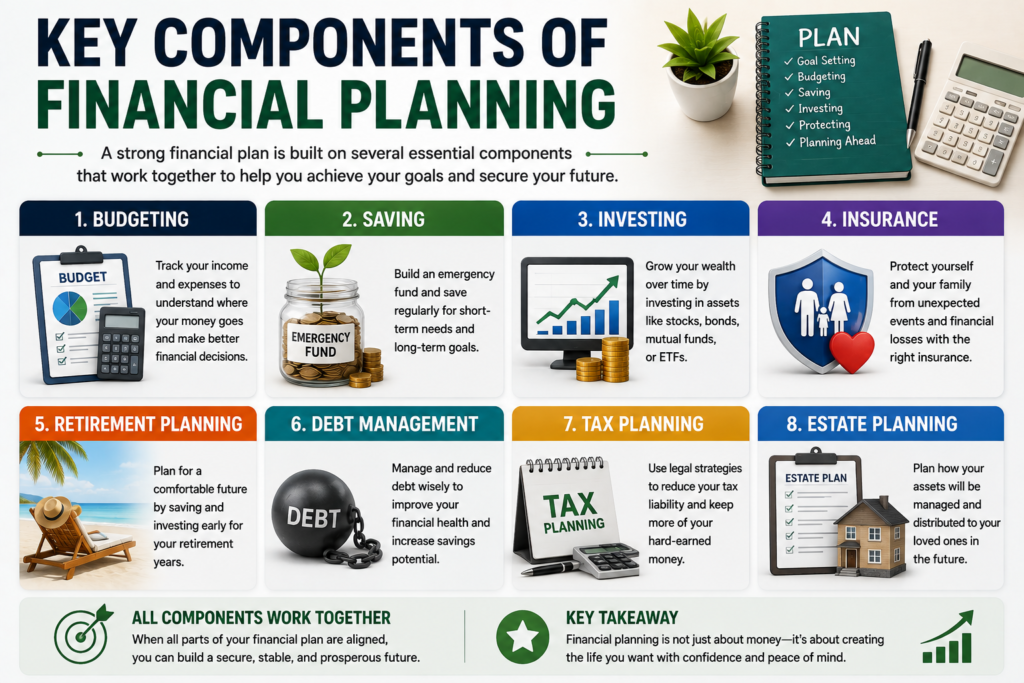
Budgeting
Create a monthly budget that tracks income and expenses.
Saving
Build an emergency fund and save for future goals.
Investing
Grow your wealth through investments such as stocks, ETFs, bonds, or mutual funds.
Insurance
Protect yourself and your family from unexpected financial losses.
Retirement Planning
Prepare financially for life after your working years.
Tax Planning
Use legal strategies to reduce taxes and maximize savings.
Estate Planning
Plan how your assets will be distributed in the future.
Steps to Create a Financial Plan

Assess Your Current Finances
Review your income, expenses, savings, investments, and debts.
Set SMART Goals
Create goals that are:
- Specific
- Measurable
- Achievable
- Relevant
- Time-bound
Create a Budget
Allocate your income toward essential expenses, savings, investments, and discretionary spending.
Build an Emergency Fund
Aim to save enough to cover several months of essential living expenses.
Start Investing
Choose investments that align with your financial goals and risk tolerance.
Review Your Plan Regularly
Adjust your financial plan as your income, expenses, and life circumstances change.
Common Financial Planning Mistakes
Many people make avoidable financial mistakes.
- Living without a budget
- Spending more than you earn
- Ignoring emergency savings
- Delaying investing
- Taking on excessive debt
- Not reviewing financial goals
- Failing to diversify investments
Real-World Examples of Financial Planning
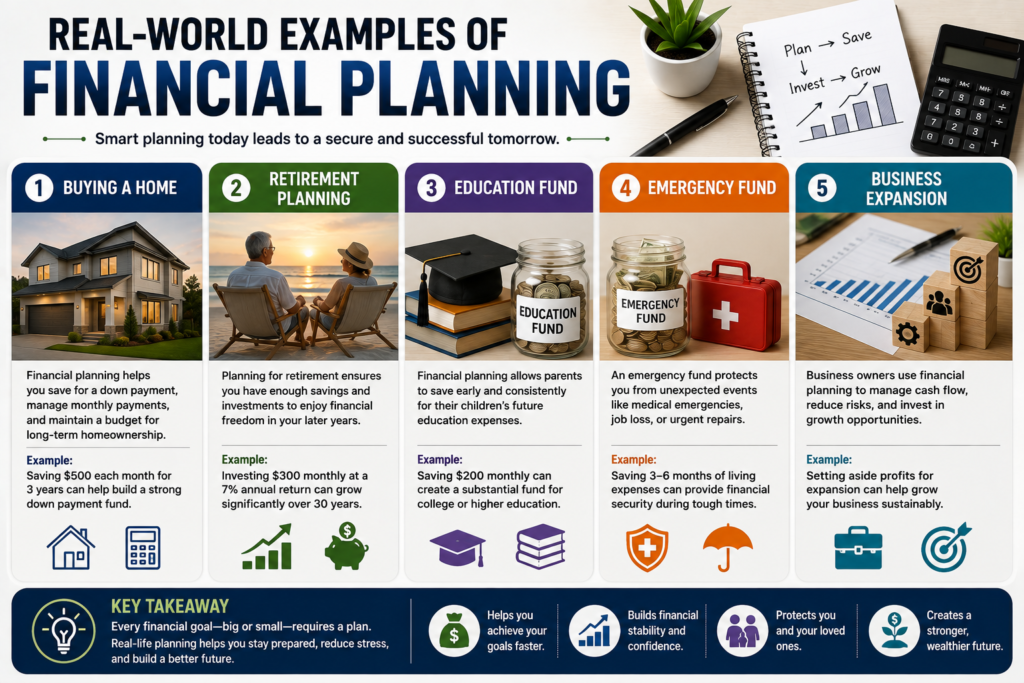
Buying a Home
Saving for a down payment while maintaining a monthly budget.
Retirement Planning
Investing consistently throughout your career to build retirement savings.
Education Fund
Parents regularly save for their children’s future education expenses.
Emergency Fund
Building savings to cover unexpected medical bills or job loss.
Business Expansion
A business owner plans future investments to grow operations sustainably.
The Future of Financial Planning

Technology is transforming financial planning through artificial intelligence, budgeting apps, robo-advisors, digital banking, and personalized financial tools.
Automation helps people track spending, manage investments, and monitor financial goals in real time.
As financial technology continues to evolve, individuals will have greater access to professional-quality financial planning tools, making it easier to build long-term financial security.
Frequently Asked Questions
What is financial planning?
Financial planning is the process of managing your finances to achieve future financial goals.
Why is financial planning important?
It helps improve money management, reduce financial stress, and prepare for future expenses.
When should I start financial planning?
The earlier you begin, the more time your savings and investments have to grow.
Do I need a financial planner?
Not necessarily. Many people successfully manage their finances using budgeting tools, investment platforms, and financial education.
What are the main parts of financial planning?
Budgeting, saving, investing, insurance, retirement planning, tax planning, and debt management.
Conclusion
Financial planning is one of the most valuable skills anyone can develop. By creating a clear strategy for saving, investing, budgeting, and protecting your finances, you can build greater financial confidence and achieve your long-term goals.
No matter your income level, starting today and staying consistent can make a significant difference in your financial future.