What Is Inflation? A Complete Beginner’s Guide (2026)
What Is Inflation? A Complete Beginner’s Guide (2026)
Introduction
Inflation is one of the most important concepts in economics and personal finance. It affects the prices you pay for groceries, fuel, housing, healthcare, and almost every product or service you use.
While moderate inflation is considered a normal part of a healthy economy, high inflation can reduce purchasing power and make everyday life more expensive. Understanding how inflation works helps individuals make better financial decisions, protect their savings, and plan for the future.
In this guide, you’ll learn what inflation is, what causes it, how it affects people and businesses, its advantages and disadvantages, and ways to reduce its impact on your finances.
What Is Inflation?
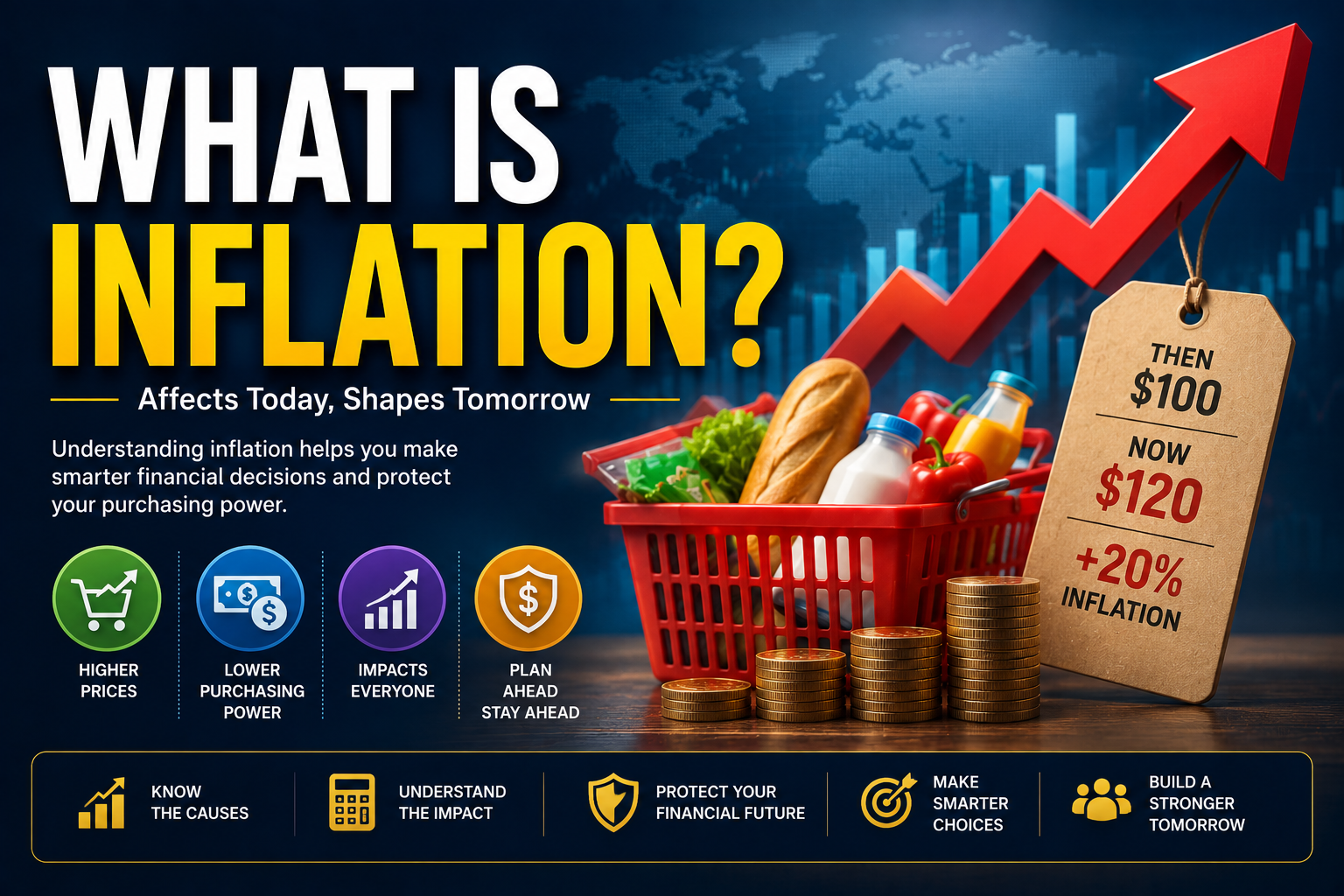
Inflation is the gradual increase in the prices of goods and services over time, which reduces the purchasing power of money.
In simple words, inflation means that the same amount of money buys fewer goods and services than it did before.
For example, if a bottle of water costs $1 today and $1.10 next year, inflation has increased the price by 10%.
Why Is Inflation Important?
Inflation affects everyone, regardless of income or profession.
Reduces Purchasing Power
As prices rise, money buys fewer products and services.
Influences Interest Rates
Central banks often adjust interest rates to help control inflation.
Affects Savings
Money kept in cash loses value over time if inflation is higher than the interest earned.
Impacts Investments
Some investments perform better than others during periods of inflation.
Shapes Economic Policy
Governments and central banks monitor inflation closely to maintain economic stability.
What Causes Inflation?
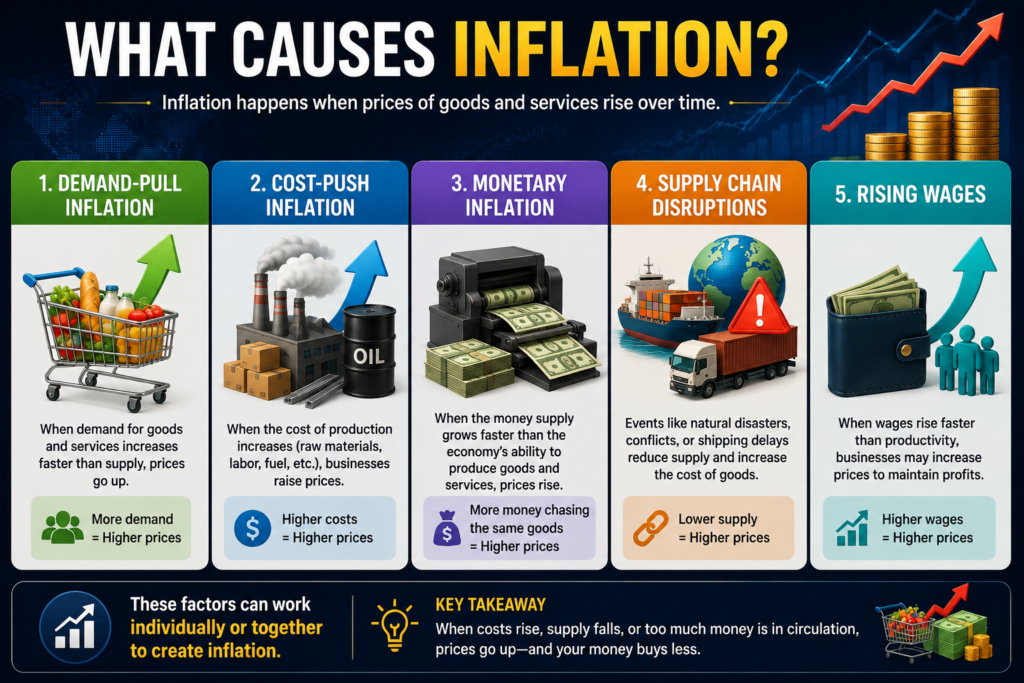
Several factors can contribute to rising prices.
Demand-Pull Inflation
Occurs when consumer demand grows faster than supply.
Cost-Push Inflation
Happens when production costs increase, causing businesses to raise prices.
Monetary Inflation
Can occur when the money supply grows much faster than the economy.
Supply Chain Disruptions
Natural disasters, conflicts, or transportation issues can reduce supply and increase prices.
Rising Wages
Higher labor costs may lead businesses to increase product prices.
Types of Inflation
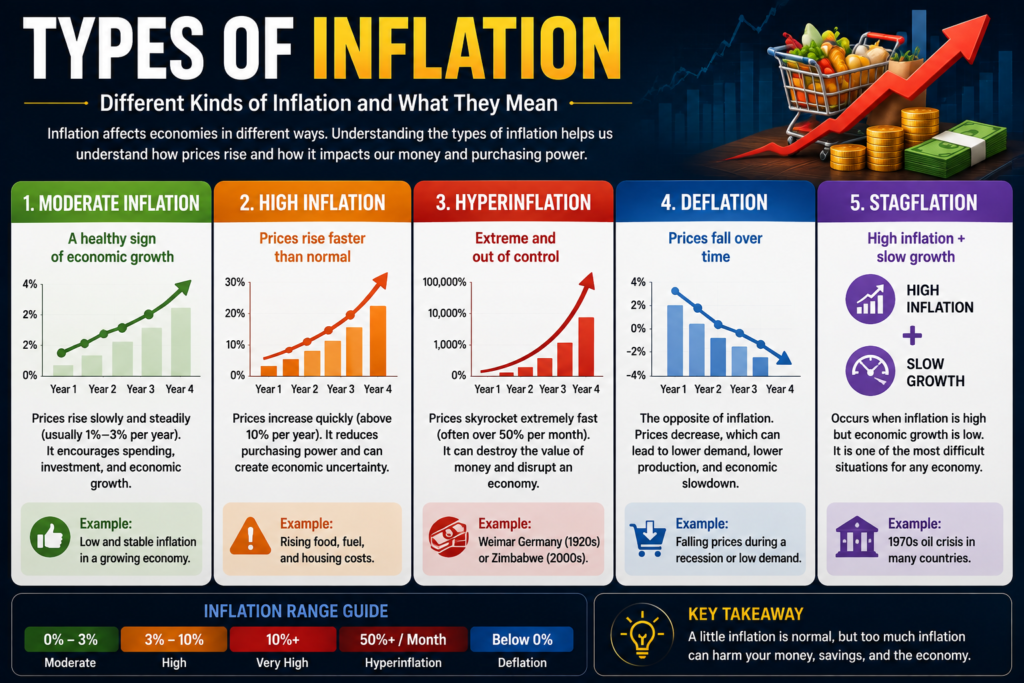
Moderate Inflation
A slow and manageable increase in prices that supports economic growth.
High Inflation
Rapid price increases that reduce purchasing power more quickly.
Hyperinflation
An extremely high and uncontrolled rise in prices that can severely disrupt an economy.
Deflation
The opposite of inflation, where prices fall over time. While lower prices may sound beneficial, prolonged deflation can also harm economic activity.
How Inflation Affects Everyday Life
Inflation influences many aspects of personal finance.
Grocery Prices
Food becomes more expensive over time.
Housing Costs
Rent and property prices often increase during inflationary periods.
Fuel Prices
Transportation and travel become more costly.
Savings
Cash savings lose purchasing power if they don’t grow as fast as inflation.
Salaries
Workers often seek higher wages to keep up with rising living costs.
Real-World Examples of Inflation
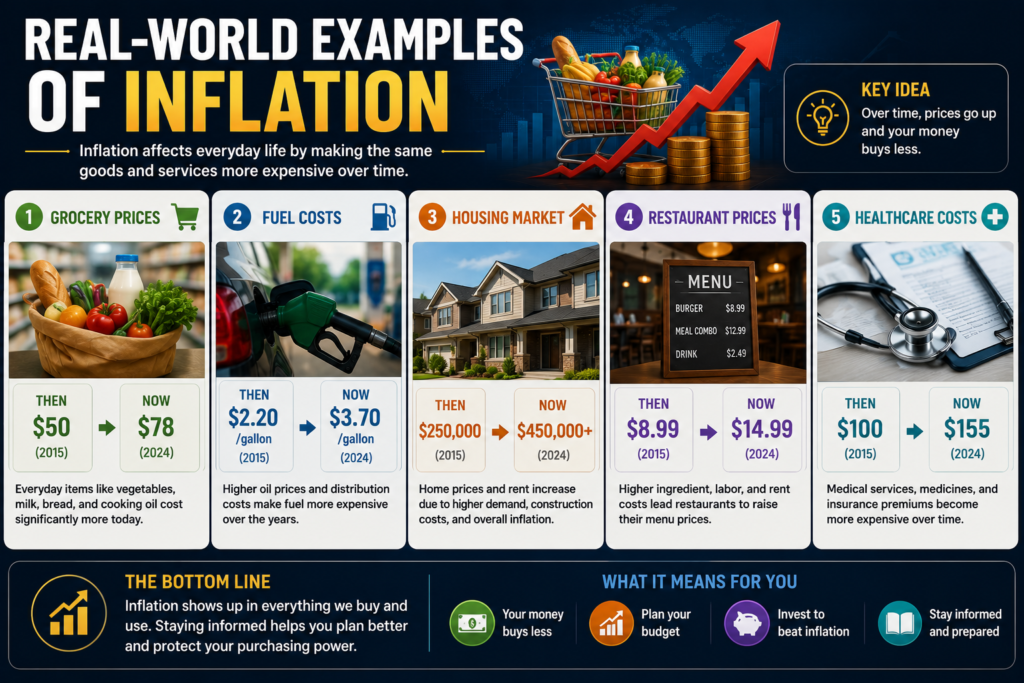
Grocery Shopping
A family notices their weekly grocery bill has increased compared to previous years.
Fuel Costs
Higher oil prices lead to more expensive transportation.
Housing Market
Property prices and rental costs rise as demand increases.
Restaurant Prices
Businesses increase menu prices due to higher ingredient and labor costs.
Healthcare
Medical services and insurance premiums become more expensive over time.
How to Protect Yourself From Inflation
Invest for the Long Term
Some investments may outpace inflation over time.
Diversify Your Investments
Avoid relying on a single asset or investment type.
Increase Financial Knowledge
Understanding inflation helps you make informed financial decisions.
Build Emergency Savings
Maintain a financial cushion for unexpected price increases.
Review Your Budget
Regularly adjust spending to account for rising costs.
The Future of Inflation
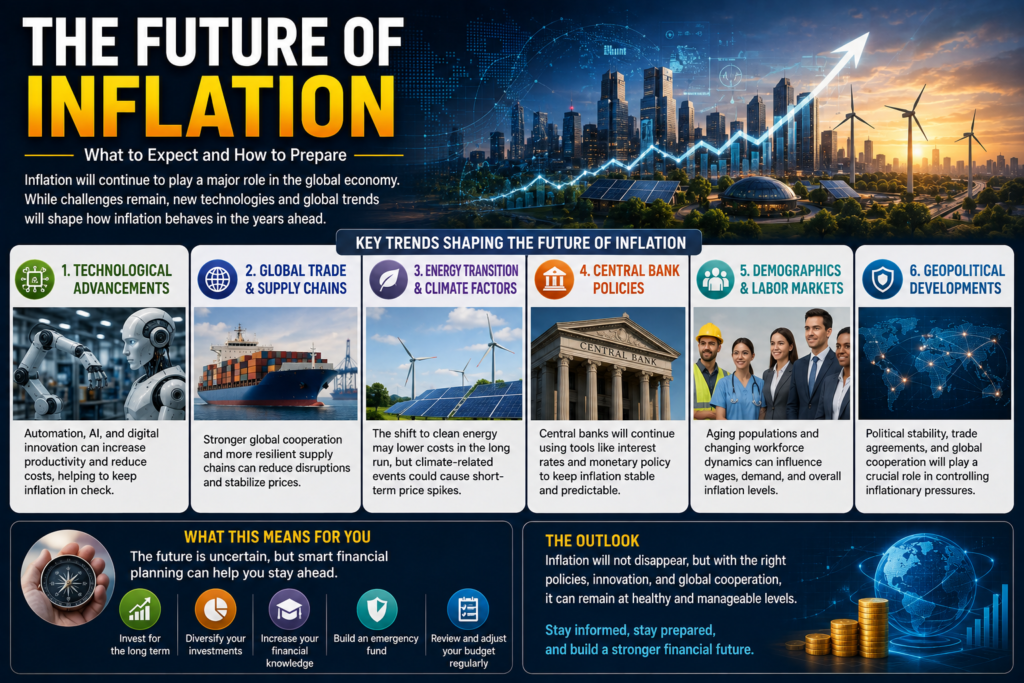
Inflation will continue to play a major role in the global economy. Central banks use interest rates and monetary policy to keep inflation under control, while governments work to support economic growth.
Advances in technology, automation, artificial intelligence, and global trade may improve productivity and help stabilize prices in some sectors. However, geopolitical events, climate-related disruptions, and supply chain challenges can still create inflationary pressure.
For individuals, understanding inflation and planning ahead will remain essential for protecting purchasing power and achieving long-term financial security.
Frequently Asked Questions
What is inflation?
Inflation is the gradual increase in prices over time, reducing the purchasing power of money.
Is inflation always bad?
No. Moderate inflation is considered a normal part of a healthy economy, while very high inflation can create financial challenges.
What causes inflation?
Inflation can result from increased demand, higher production costs, growth in the money supply, or supply chain disruptions.
How does inflation affect savings?
If savings grow more slowly than inflation, their purchasing power decreases over time.
How can I protect myself from inflation?
Investing wisely, diversifying assets, maintaining emergency savings, and reviewing your budget regularly can help reduce inflation’s impact.
Conclusion
Inflation is a natural part of modern economies, but understanding how it works allows individuals and businesses to make smarter financial decisions. By learning what causes inflation, how it affects purchasing power, and strategies to protect your finances, you can better prepare for changing economic conditions.
Whether you’re saving, investing, or planning for the future, understanding inflation is an essential step toward stronger financial health.