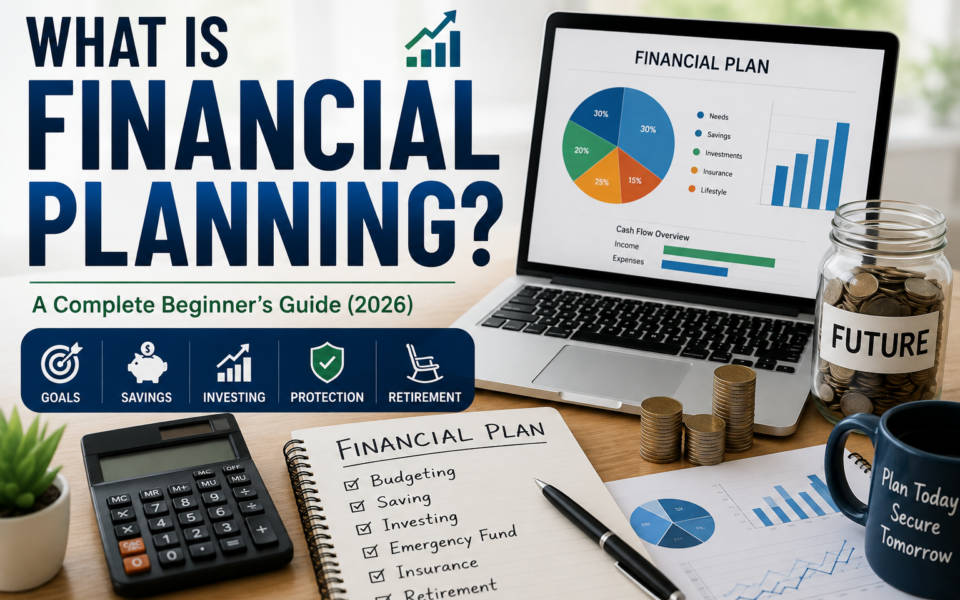
What Is Investing? A Complete Beginner’s Guide (2026)

What Is Investing? A Complete Beginner’s Guide (2026)
Introduction
Investing is one of the most effective ways to build wealth over time. Instead of letting your money sit idle, investing allows it to grow through assets that may increase in value or generate income.
Whether you’re saving for retirement, buying a home, funding your education, or achieving long-term financial goals, investing can help your money work for you.
While investing involves some level of risk, understanding the basics can help you make informed decisions and improve your financial future.
In this guide, you’ll learn what investing is, how it works, the different types of investments, common strategies, risks, real-world examples, and practical tips for beginners.
What Is Investing?
Investing is the process of using money to purchase assets that have the potential to increase in value or generate income over time.
Unlike saving, which focuses on protecting your money, investing aims to grow your wealth by taking calculated risks.
Investments can include stocks, bonds, mutual funds, exchange-traded funds (ETFs), real estate, and other financial assets.
Why Is Investing Important?
Investing offers several long-term benefits.
Builds Wealth
Investments can grow significantly through appreciation and compound returns.
Beats Inflation
Investing helps your money maintain purchasing power over time.
Creates Passive Income
Some investments generate regular income through dividends, interest, or rental payments.
Helps Achieve Financial Goals
Investing supports goals like retirement, education, travel, or buying a home.
Provides Financial Independence
Long-term investing can reduce dependence on a regular paycheck.
Types of Investments
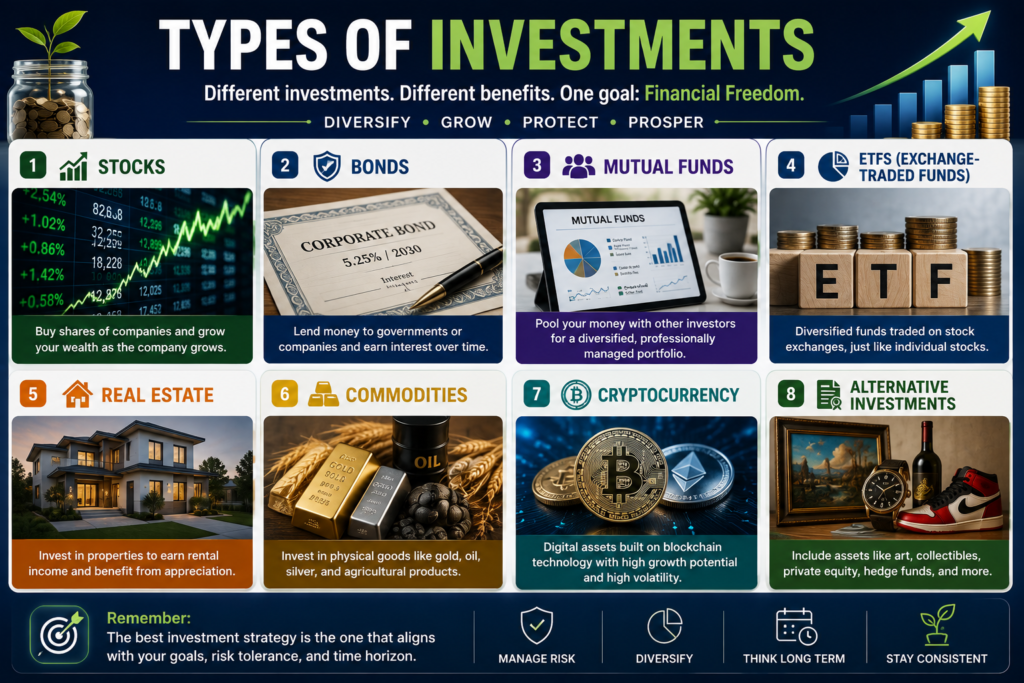
Stocks
Buying shares in publicly traded companies.
Bonds
Loans made to governments or corporations that pay interest.
Mutual Funds
Professionally managed funds that invest in a diversified portfolio.
ETFs (Exchange-Traded Funds)
Investment funds traded on stock exchanges like individual stocks.
Real Estate
Property investments that can generate rental income and appreciate in value.
Commodities
Assets such as gold, silver, oil, and agricultural products.
Cryptocurrency
Digital assets such as Bitcoin and Ethereum that carry higher risk and volatility.
Risk vs. Reward
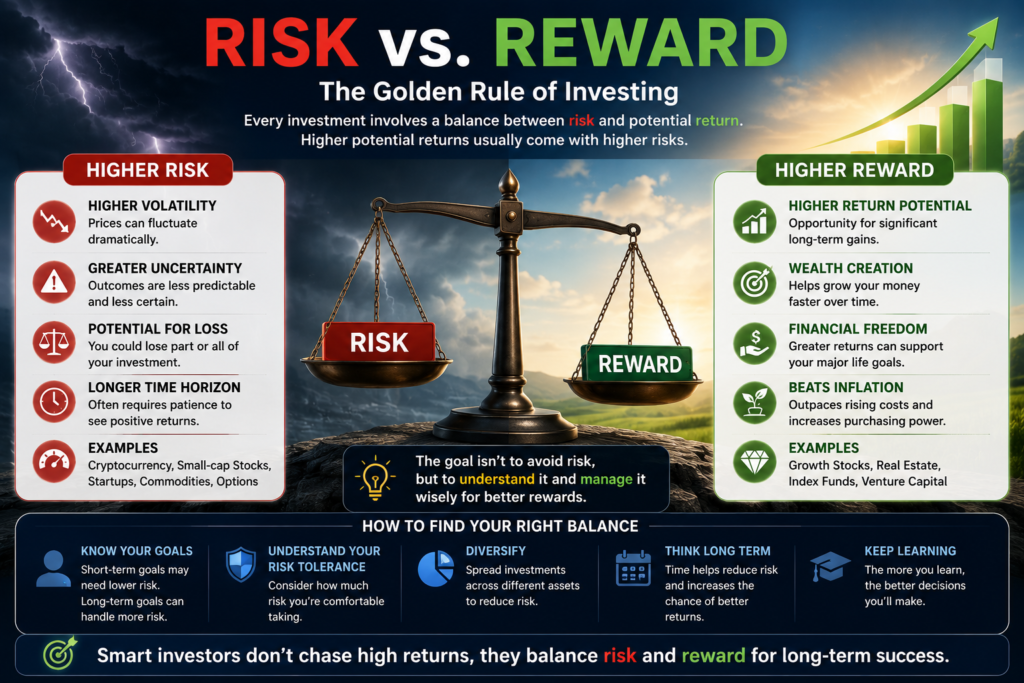
Every investment involves a balance between risk and potential return.
Generally:
- Higher potential returns usually involve higher risk.
- Lower-risk investments typically provide more stable but smaller returns.
Understanding your personal risk tolerance is an important part of successful investing.
Common Investing Strategies
Buy and Hold
Purchase investments and keep them for many years.
Dollar-Cost Averaging
Invest a fixed amount at regular intervals regardless of market conditions.
Diversification
Spread investments across multiple asset types to reduce risk.
Value Investing
Look for undervalued investments with long-term growth potential.
Growth Investing
Focus on companies expected to grow faster than the overall market.
Real-World Investing Examples
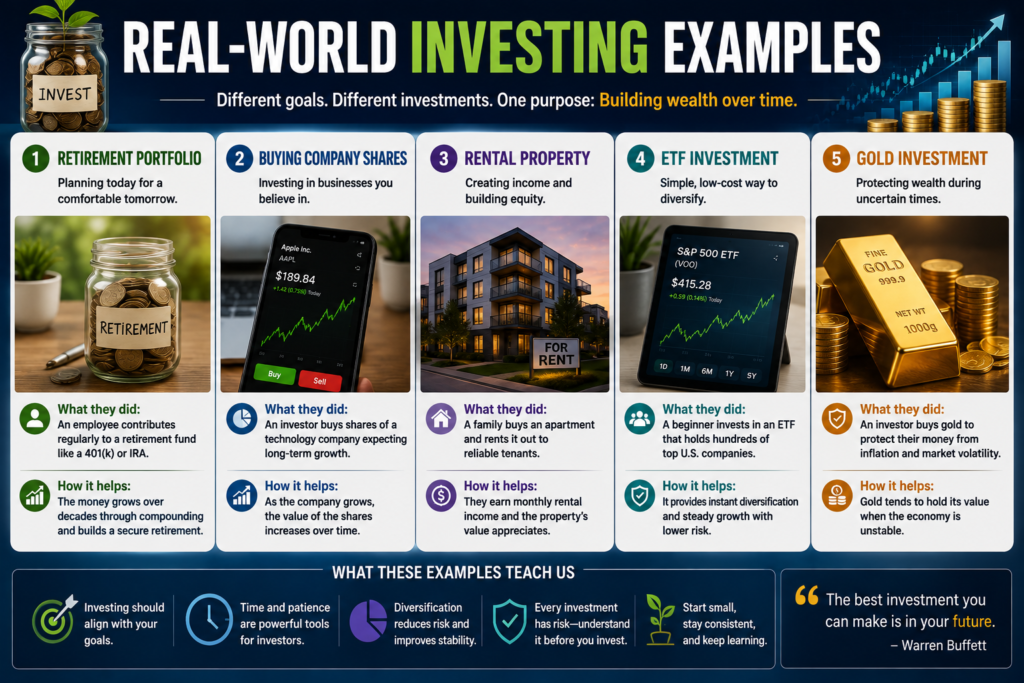
Retirement Portfolio
An employee regularly invests in retirement funds over several decades.
Buying Company Shares
An investor purchases shares in a technology company expecting long-term growth.
Rental Property
A family buys an apartment and earns monthly rental income.
ETF Investment
A beginner invests in a broad market ETF for diversified exposure.
Gold Investment
An investor buys gold to help protect against inflation and economic uncertainty.
Common Investing Mistakes
Many beginners make avoidable mistakes.
- Investing without research
- Trying to time the market
- Lack of diversification
- Emotional buying and selling
- Ignoring long-term goals
- Investing money needed for short-term expenses
How Beginners Can Start Investing
Set Clear Financial Goals
Know why you’re investing.
Build an Emergency Fund
Have savings available before investing.
Learn the Basics
Understand investment products before buying them.
Start Small
Many platforms allow beginners to invest with modest amounts.
Stay Consistent
Regular investing often matters more than trying to predict market movements.
The Future of Investing
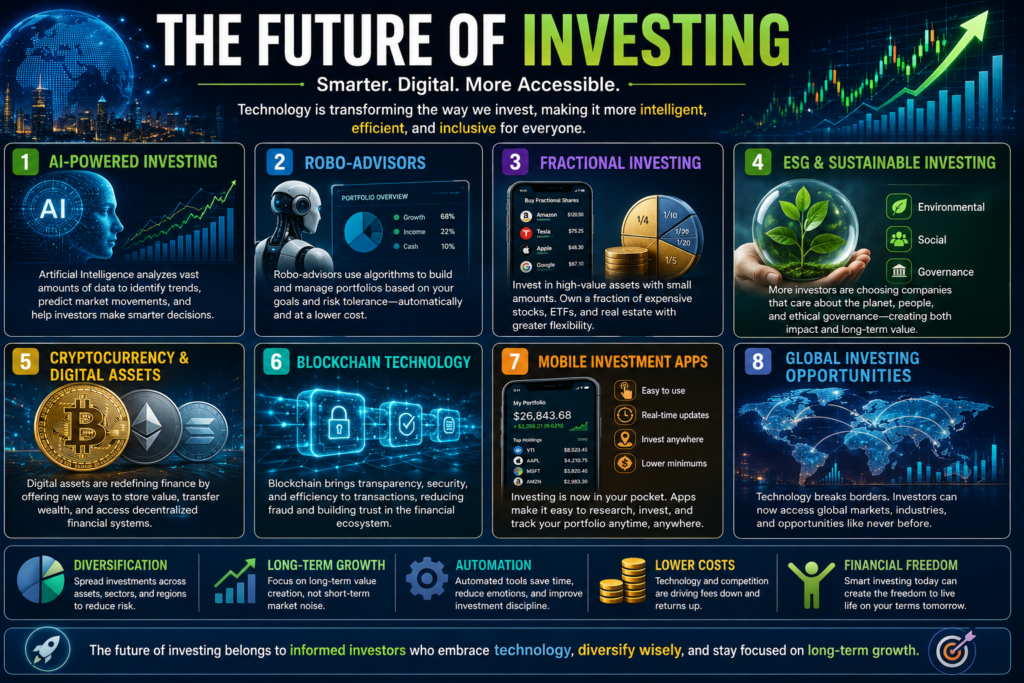
Technology continues to transform investing.
Artificial Intelligence, robo-advisors, fractional investing, mobile investment apps, and blockchain technology are making investing more accessible than ever.
Sustainable investing (ESG), automation, and personalized financial advice are expected to play an even larger role in the future.
Frequently Asked Questions
What is investing?
Investing means using money to buy assets that may increase in value or generate income over time.
Is investing risky?
Yes. Every investment carries some level of risk, but diversification and long-term planning can help reduce it.
What’s the difference between saving and investing?
Saving focuses on protecting money, while investing focuses on growing it.
Can beginners start investing?
Absolutely. Many platforms allow beginners to start with relatively small amounts while learning gradually.
What is the safest investment?
No investment is completely risk-free. Lower-risk options, such as high-quality government bonds or insured savings products, generally offer more stability but typically lower returns than higher-risk investments.
Conclusion
Investing is one of the most powerful tools for building long-term financial security. By understanding different investment types, managing risk wisely, and staying focused on long-term goals, anyone can begin creating a stronger financial future.
The key to successful investing is patience, consistency, and continuous learning rather than trying to make quick profits.