Health Explained: The Foundation of a Better Life
Health Explained: The Foundation of a Better Life
Introduction
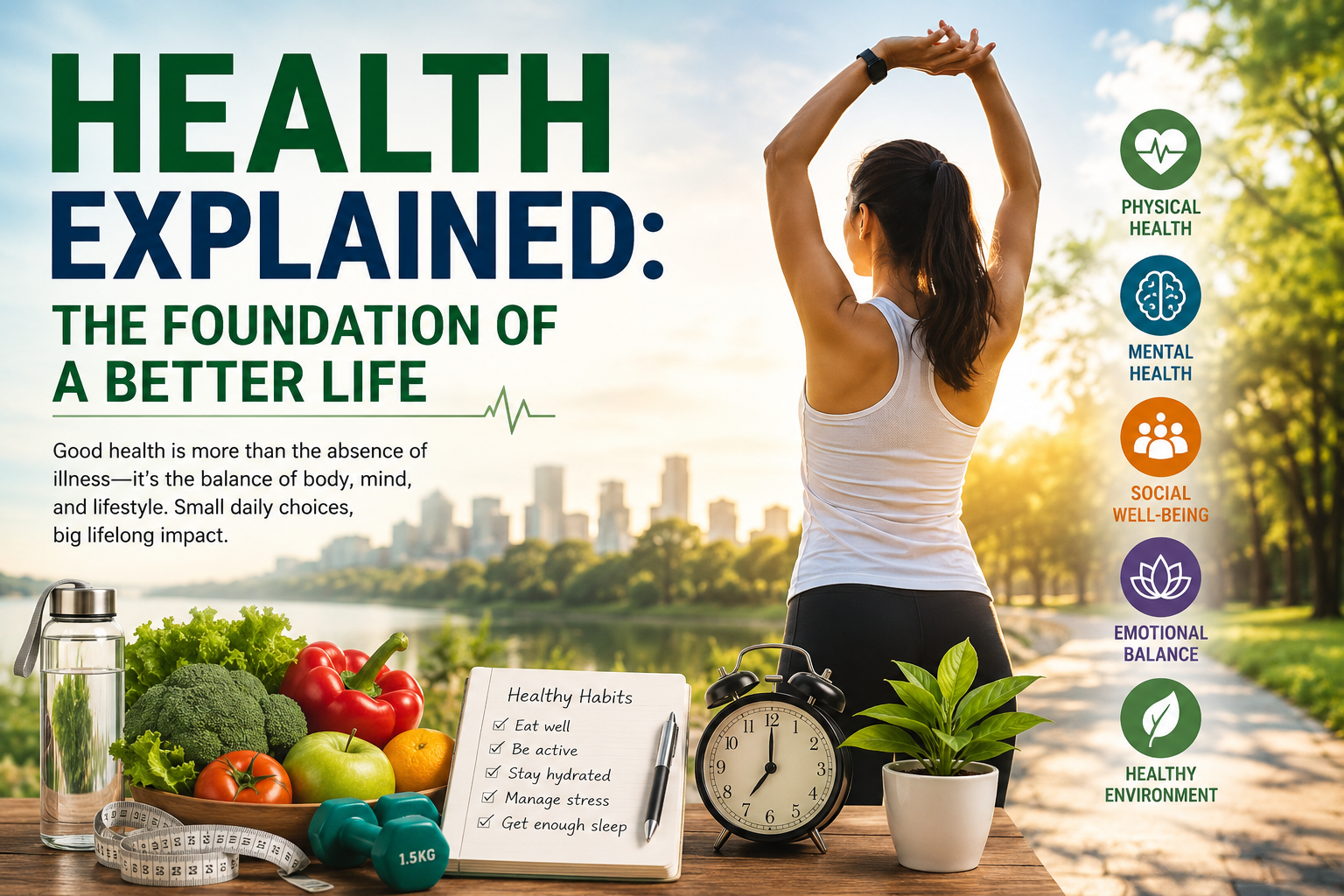
Health is often described as our greatest wealth—and for good reason. It affects every part of our lives, from how much energy we have in the morning to how well we think, work, learn, and connect with others.
Many people associate health with simply not being sick, but true health is much broader. It includes caring for your body, maintaining a healthy mind, building strong relationships, and making choices that support long-term well-being.
In today’s fast-paced world, developing healthy habits is more important than ever. Small daily decisions—like eating nutritious food, staying active, getting enough sleep, and managing stress—can have a lasting impact on your quality of life.
This article explores what health really means, why it matters, and how you can build a healthier future one step at a time.
Health Is More Than the Absence of Disease
According to health experts, health is a state of complete physical, mental, and social well-being—not simply the absence of illness.
A healthy person doesn’t have to be perfect. Instead, they consistently make choices that help their body and mind function at their best.
Good health allows you to:
- Enjoy everyday activities
- Recover more quickly from illness
- Handle stress more effectively
- Stay productive at work or school
- Improve overall happiness
Health is something that develops over time through consistent lifestyle choices rather than one single decision.
The Five Pillars of Good Health
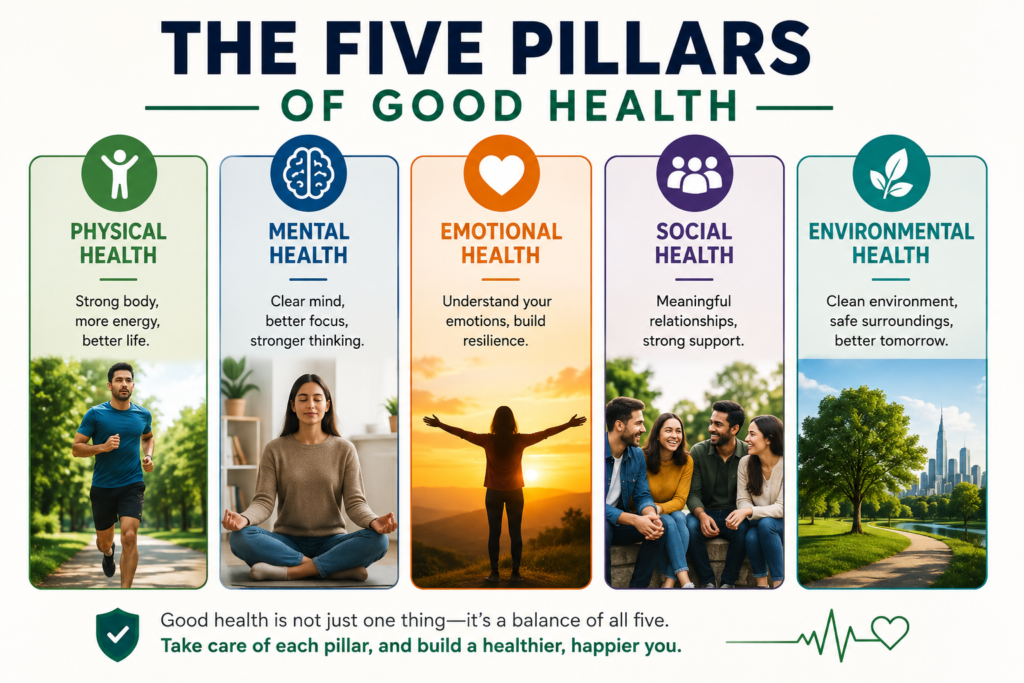
Physical Health
Physical health focuses on keeping your body strong and functioning properly through nutritious food, regular movement, adequate sleep, hydration, and preventive healthcare.
Mental Health
Mental health involves how we think, process emotions, solve problems, and respond to life’s challenges.
Maintaining mental well-being is just as important as caring for physical health.
Emotional Health
Emotional health means understanding your feelings, expressing emotions appropriately, and developing resilience during difficult situations.
Social Health
Humans thrive through meaningful relationships. Healthy friendships, family connections, and supportive communities contribute significantly to overall well-being.
Environmental Health
The environments we live, work, and study in influence our health every day. Clean air, safe drinking water, reduced pollution, and healthy surroundings all contribute to better living.
Everyday Habits That Make a Big Difference
Healthy living isn’t about making dramatic changes overnight. It’s about creating routines you can maintain.
Eat Balanced Meals
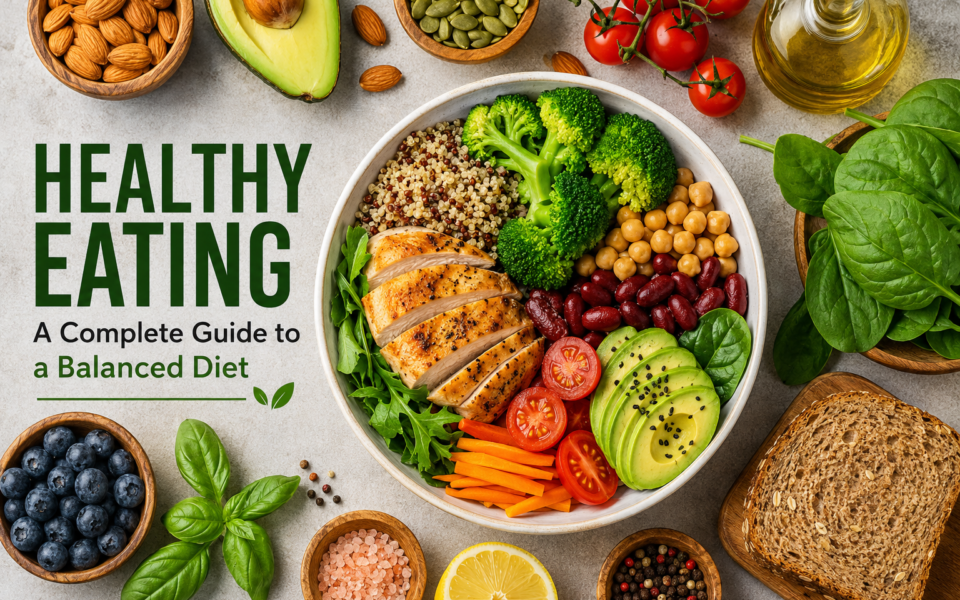
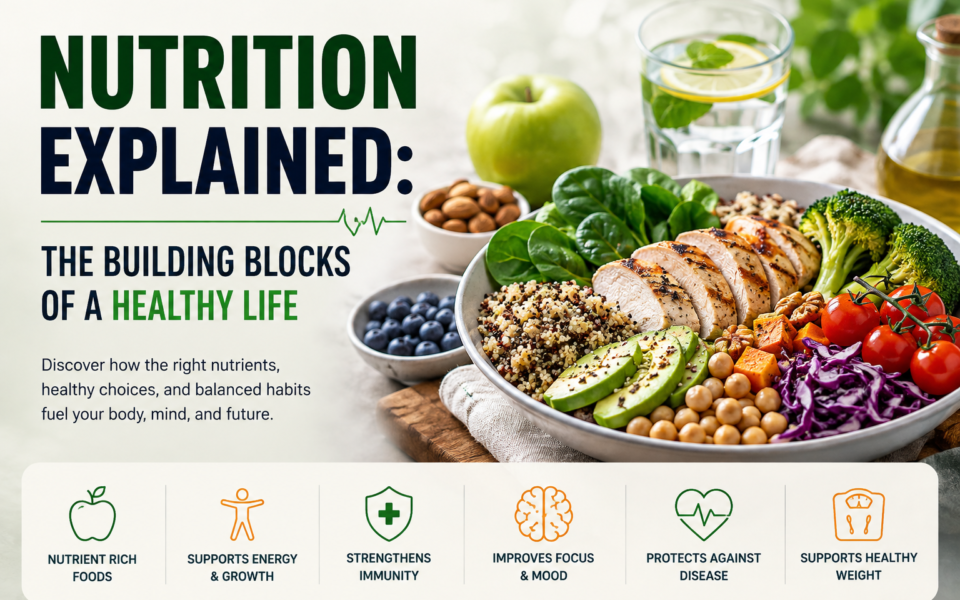
Choose meals rich in vegetables, fruits, lean proteins, whole grains, and healthy fats while limiting highly processed foods.
Stay Physically Active
Aim for regular physical activity throughout the week. Walking, cycling, swimming, strength training, and sports all support better health.
Prioritize Quality Sleep
Sleep allows the body and brain to recover, improving memory, concentration, mood, and immune function.
Drink Enough Water
Proper hydration supports digestion, circulation, temperature regulation, and overall body performance.
Manage Stress
Healthy coping strategies such as meditation, hobbies, deep breathing, and spending time with loved ones can improve emotional well-being.
Schedule Regular Health Checkups
Preventive care helps identify potential health issues before they become more serious.
Common Challenges to Good Health
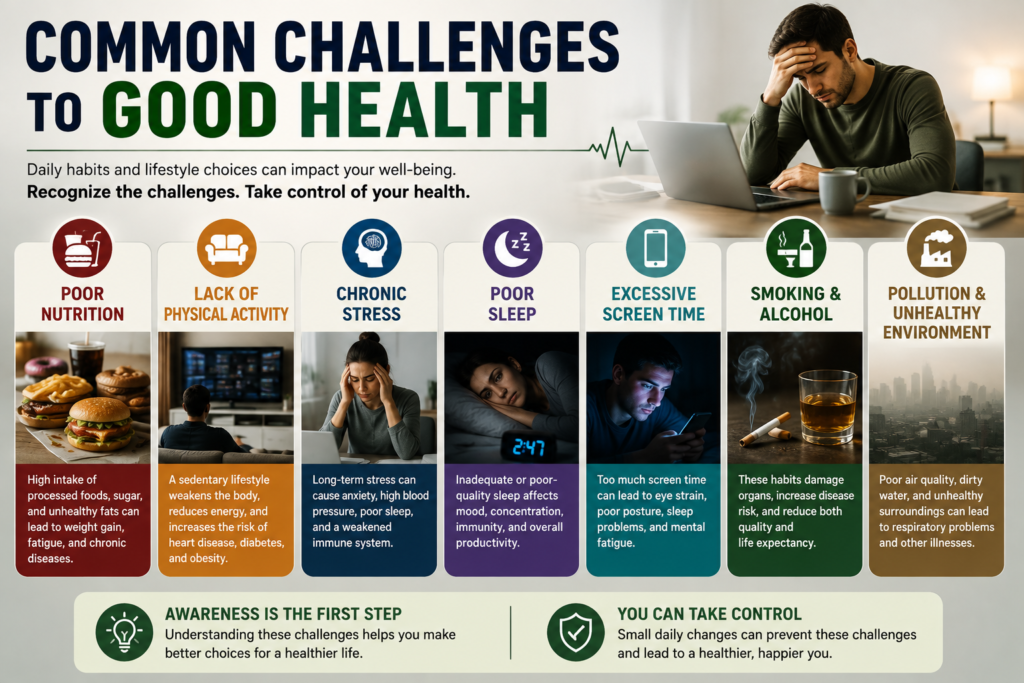
Even people with healthy intentions face obstacles.
Some of the most common include:
- Poor eating habits
- Lack of physical activity
- Chronic stress
- Sleep deprivation
- Excessive screen time
- Smoking or excessive alcohol use
- Air pollution
- Busy lifestyles
Recognizing these challenges is the first step toward overcoming them.
Real-Life Examples of Healthy Living
Healthy lifestyles look different for everyone.
Office Worker
Taking short walking breaks, eating balanced lunches, and maintaining good posture throughout the workday.
Student
Getting enough sleep before exams, staying active, and eating nutritious meals to support learning.
Parent
Preparing healthy family meals while encouraging children to stay physically active.
Older Adult
Maintaining mobility through regular exercise, routine medical checkups, and social engagement.
Athlete
Combining proper nutrition, structured training, recovery, and hydration to optimize performance.
Health Myths You Should Stop Believing
“Healthy people never get sick.”
Even healthy individuals can become ill. Good health often helps with prevention and recovery rather than guaranteeing perfect health.
“Skipping meals helps you lose weight.”
Skipping meals may lead to overeating later and doesn’t always support healthy weight management.
“Exercise alone is enough.”
Physical activity is important, but nutrition, sleep, stress management, and preventive healthcare also play major roles.
“Mental health isn’t part of overall health.”
Mental health is a core component of overall wellness and deserves equal attention.
The Future of Health
Healthcare is changing rapidly.
Artificial intelligence is assisting doctors with diagnosis, wearable devices monitor heart rate and activity in real time, telemedicine allows patients to consult healthcare professionals remotely, and personalized medicine is making treatments more precise.
Preventive healthcare is becoming increasingly important as technology helps identify risks earlier than ever before.
In the future, maintaining good health will likely rely not only on medical treatment but also on smart technology, healthier lifestyles, and personalized care.
Frequently Asked Questions
What is health?
Health is a state of physical, mental, emotional, and social well-being that allows people to live active and fulfilling lives.
Why is health important?
Good health improves quality of life, increases energy, reduces disease risk, and supports both physical and mental well-being.
What are the main dimensions of health?
Physical, mental, emotional, social, and environmental health all contribute to overall wellness.
How can I become healthier?
Focus on balanced nutrition, regular exercise, quality sleep, stress management, hydration, and routine medical checkups.
Can small lifestyle changes really improve health?
Yes. Consistent healthy habits often produce meaningful long-term improvements over time.
Final Thoughts
Health isn’t achieved through one perfect meal or one intense workout. It’s built through thousands of small choices made every day.
Whether your goal is to have more energy, prevent disease, improve mental well-being, or simply enjoy life more, investing in your health is one of the most valuable decisions you can make.
The journey toward better health doesn’t require perfection—it begins with one positive step and continues through consistency.